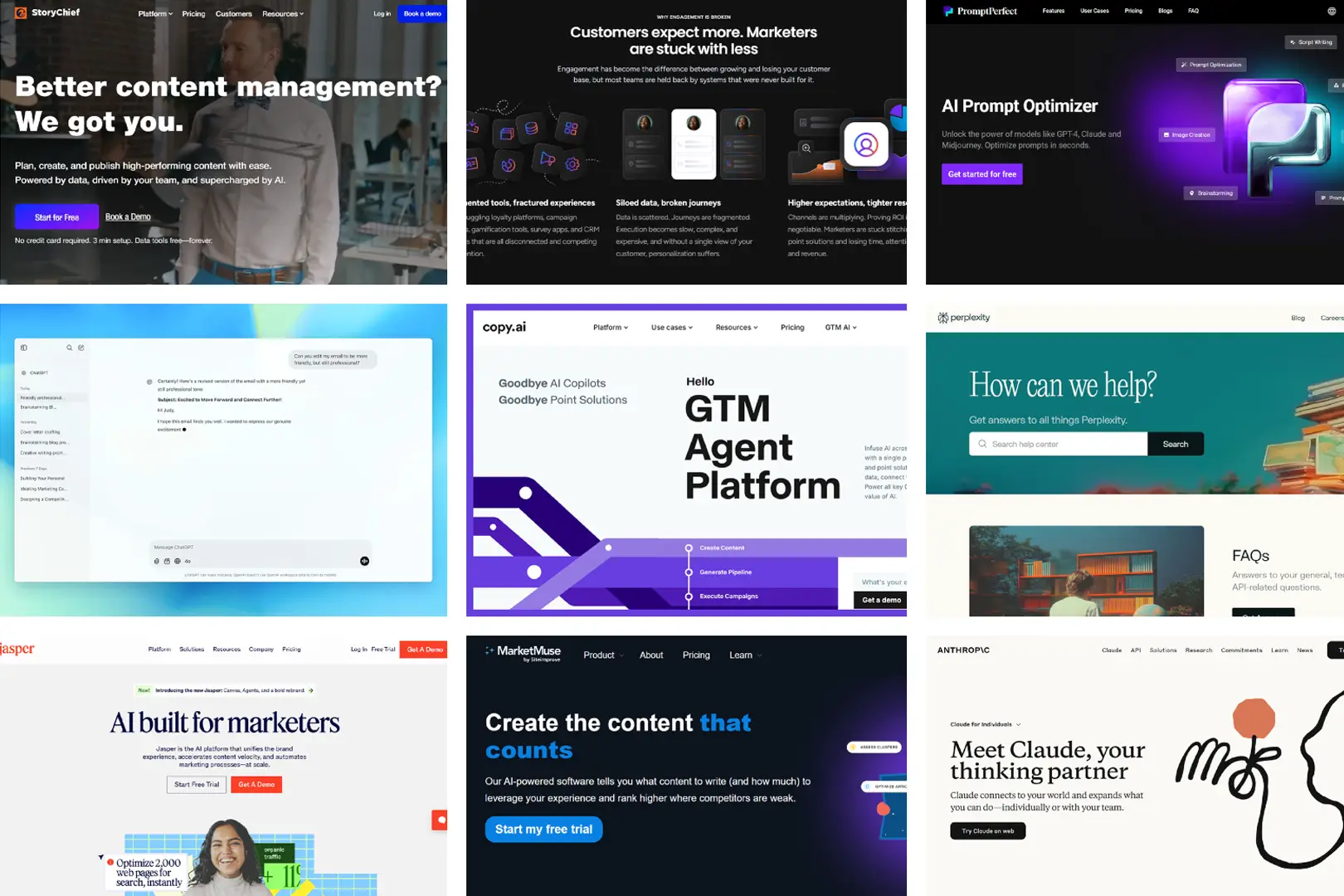
This isn’t another “best AI writing tools” list. At Trularity, we’re focusing on the AI search visibility tools that can help your brand stand out in generative engines like ChatGPT and Grok. Speedy content creation is great, sure. But will it actually be seen?
AI engines prioritize structured, trustworthy content. Think bullet points, tables, FAQs, sourced facts, etc. They’re just easier for engines to extract and surface.
We put many AI tools to the test. Then narrowed them down them to our 10 favorite tools that excel at creating AI-friendly formats, embedding trust signals, and optimizing for visibility.
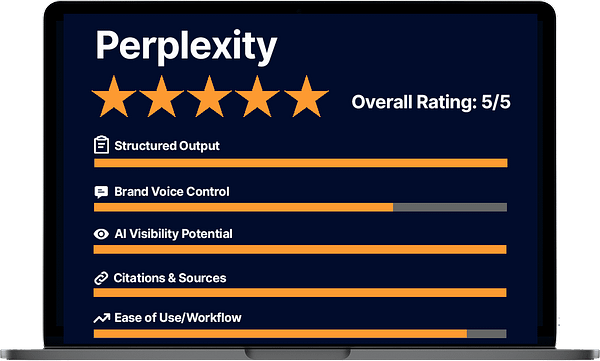
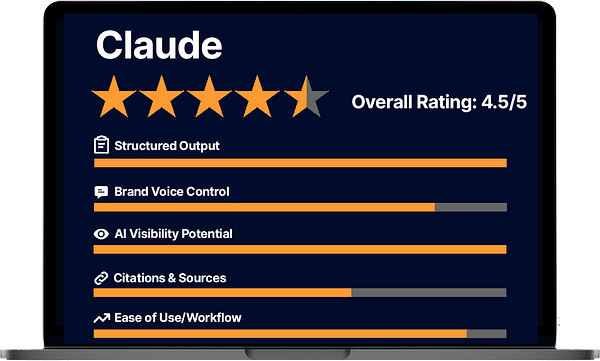
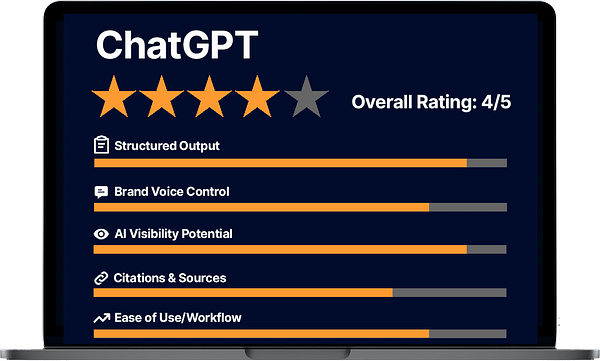
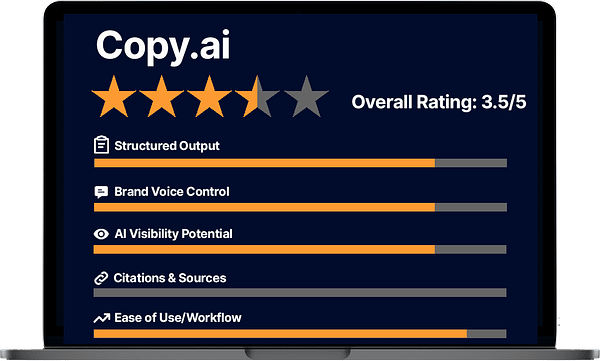
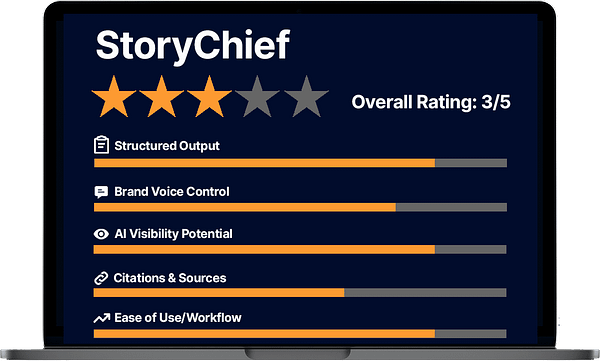
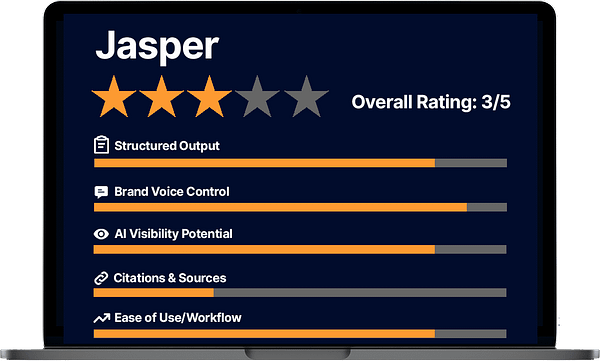
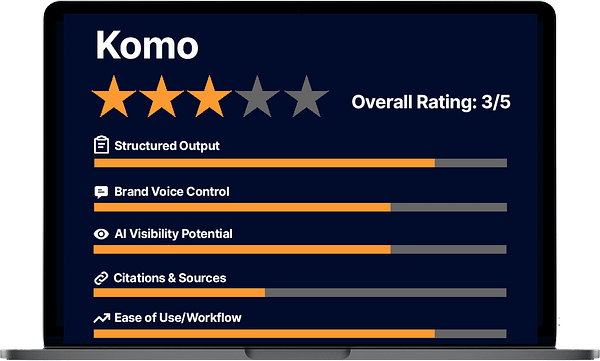
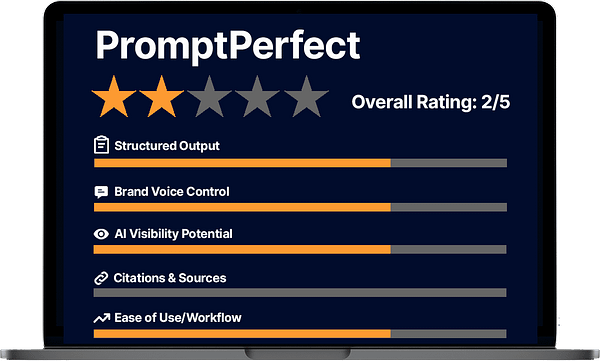
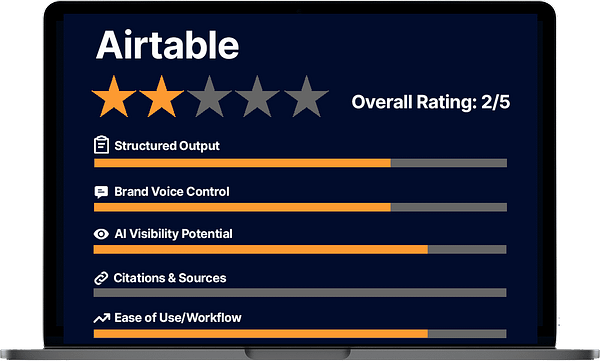
We gave each tool an overall star rating for AI visibility potential along with progress bars (0–100) across five criteria: structured output, brand voice control, AI visibility alignment, citation support, and ease of use. It’s worth noting that these ratings focus on each tool’s performance in these specific areas, not its overall quality.
We also labeled each tool to show where it fits in a visibility strategy:
- AI-Surfacing Native: Built in a way that naturally produces content AI engines like to surface.
- AI-Surfacing Capable: Can be tuned for AI-friendly output with the right approach or prompts.
- AI-Surfacing Booster: Not a writer itself, but improves the visibility performance of other tools.
- Hidden Utility: Not designed for visibility, but offers unexpected features that can help.
1. Perplexity
Rating: 5/5
AI-Surfacing Native
Why it’s valuable for AI visibility
Perplexity isn’t a writing tool. It’s a visibility compass.
Every answer it generates includes concise structure, trust-building citations, and clean formatting that closely matches the content AI engines tend to surface in their own responses.
That makes it one of the most useful tools for brands that want to understand what visibility-optimized content actually looks like. It’s not for writing a full blog post. It’s for generating a blueprint for AI-friendly formatting.
Whether you’re building a product FAQ, writing an explainer, or drafting a list of features, running your topic through Perplexity gives you the kind of structure AI engines prefer to quote and reuse.
✅ Best use case
Use Perplexity to generate source-backed outlines, summaries, or answer snippets, then build out your content around those structures in your preferred writing tool.
⚠️ Limitations
Not designed for long-form writing. Best used for content planning, structure, and format modeling, not full production.
2. Claude
Rating: 4.5/5
AI Surfacing Native
Why it’s valuable for AI visibility
Claude is one of the most consistent tools for producing clean, well-organized content. Its natural structure makes it ideal for formats AI engines frequently reuse, such as FAQs, outlines, how-to steps, and summaries.
It doesn’t include citations by default and isn’t built specifically for AI search visibility. However, its ability to generate clear, scannable, and logically structured content with simple prompts makes it highly effective for formatting your brand’s information in a way AI can easily extract.
Many AI engines prioritize clarity and structure when surfacing responses. Claude delivers both reliably, giving your content a strong chance of being selected and reused.
✅ Best use case
Use Claude to draft FAQ sections, instructional content, or clean summaries that mirror formats found in AI-generated answers.
⚠️ Limitations
No built-in citation system. While it can include citations with specific prompting, it’s not optimized for seamless external source attribution.
3. ChatGPT
Rating: 4/5
AI-Surfacing Native
Why it’s valuable for AI visibility
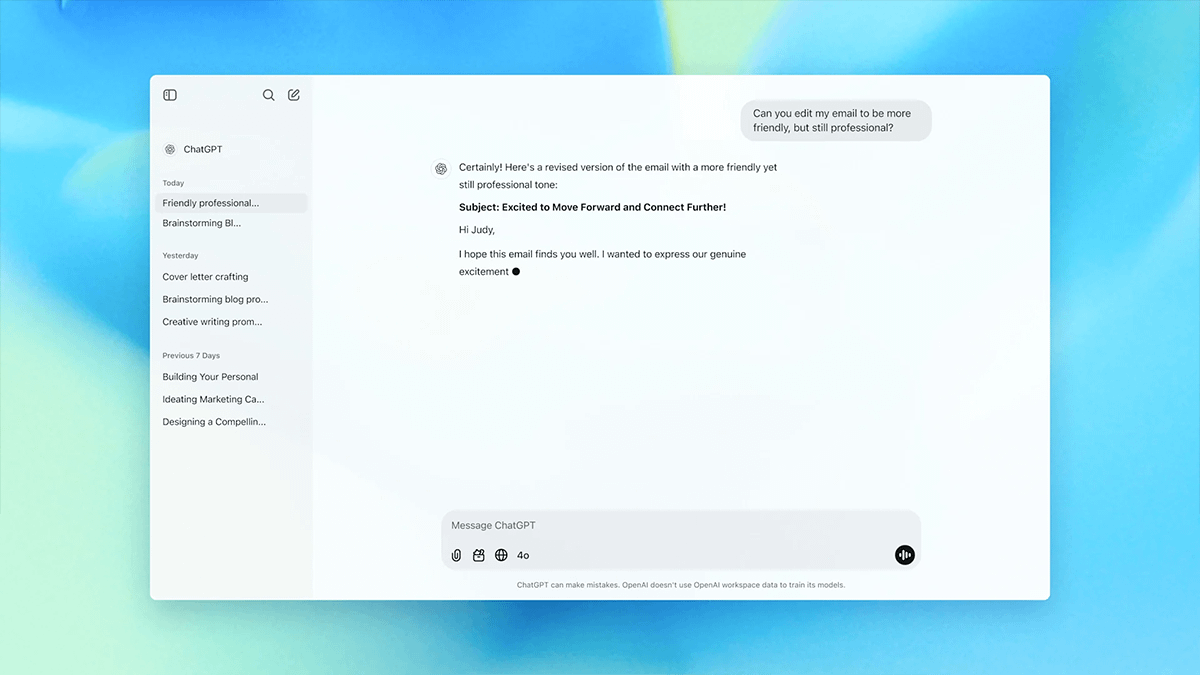
ChatGPT is one of the most versatile tools available for generating structured content. With the right prompt, it can produce bullet points, tables, FAQs, comparison lists, and summaries that align well with the formats AI engines prefer to surface.
That flexibility makes it a strong visibility tool, especially for brands who know what they want their content to look like. However, ChatGPT doesn’t cite sources and doesn’t default to structured output unless prompted. The value comes from how you use it, not what it does on its own.
When paired with a tool like Perplexity or a clear structure guide, ChatGPT can turn well-researched ideas into clean, reusable content that fits the AI answer style.
✅ Best use case
Use ChatGPT to convert researched topics or outlines into well-structured content formats, especially FAQs, product summaries, and comparisons.
⚠️ Limitations
No citation system. Output quality and structure depend heavily on the quality of the prompt.
4. MarketMuse
Rating: 4/5
AI-Surfacing Capable
Why it’s valuable for AI visibility
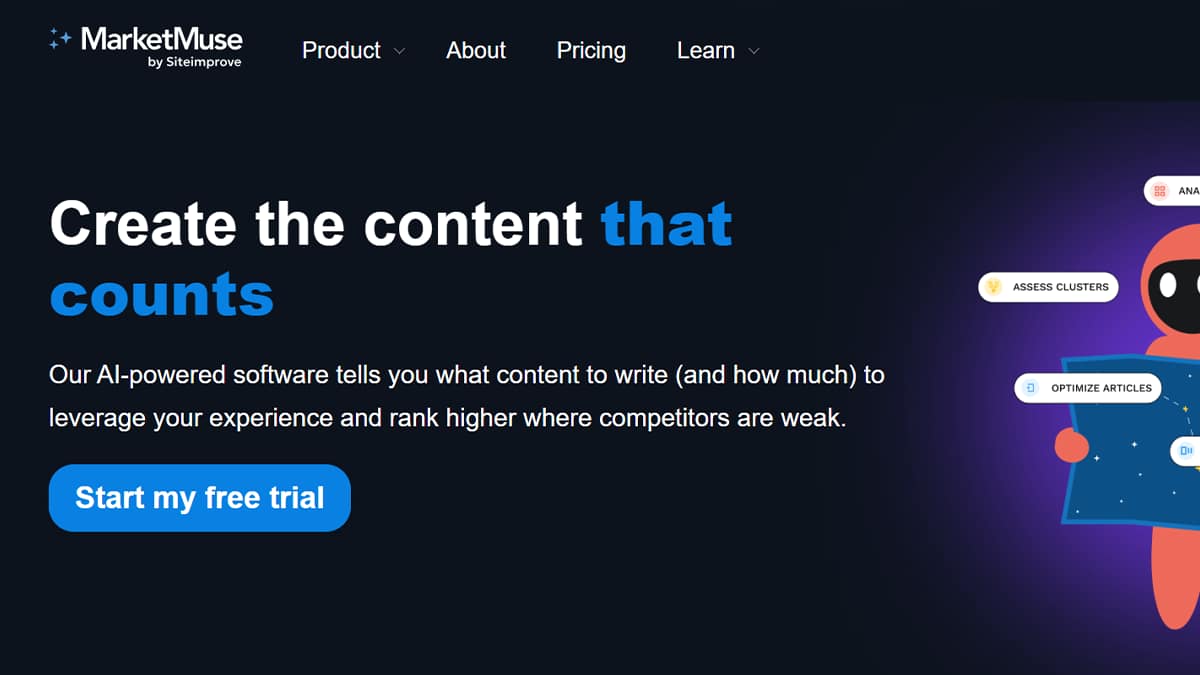
MarketMuse doesn’t generate content. It tells you what content to create, how to structure it, and which topics to prioritize in order to build long-term authority. That matters for AI search visibility because engines like ChatGPT and Perplexity often favor sources with topical depth and semantic relevance.
By identifying gaps in your content and showing how competitors rank for related terms, MarketMuse helps you shape your content strategy around the kinds of queries that AI models are trained to answer. It’s especially useful for brands that want to own a topic and build credibility over time.
The platform doesn’t surface your brand directly, but it increases your odds by helping you publish the type of content AI engines are more likely to find, trust, and reuse.
✅ Best use case
Use MarketMuse to plan a content roadmap around high-trust topics that AI engines are likely to include in generated answers.
⚠️ Limitations
Requires a separate writing tool. Not ideal for small budgets or quick-turn content.

5. Copy.ai
Rating: 3.5/5
Label: AI-Surfacing Capable
Why it’s valuable for AI visibility
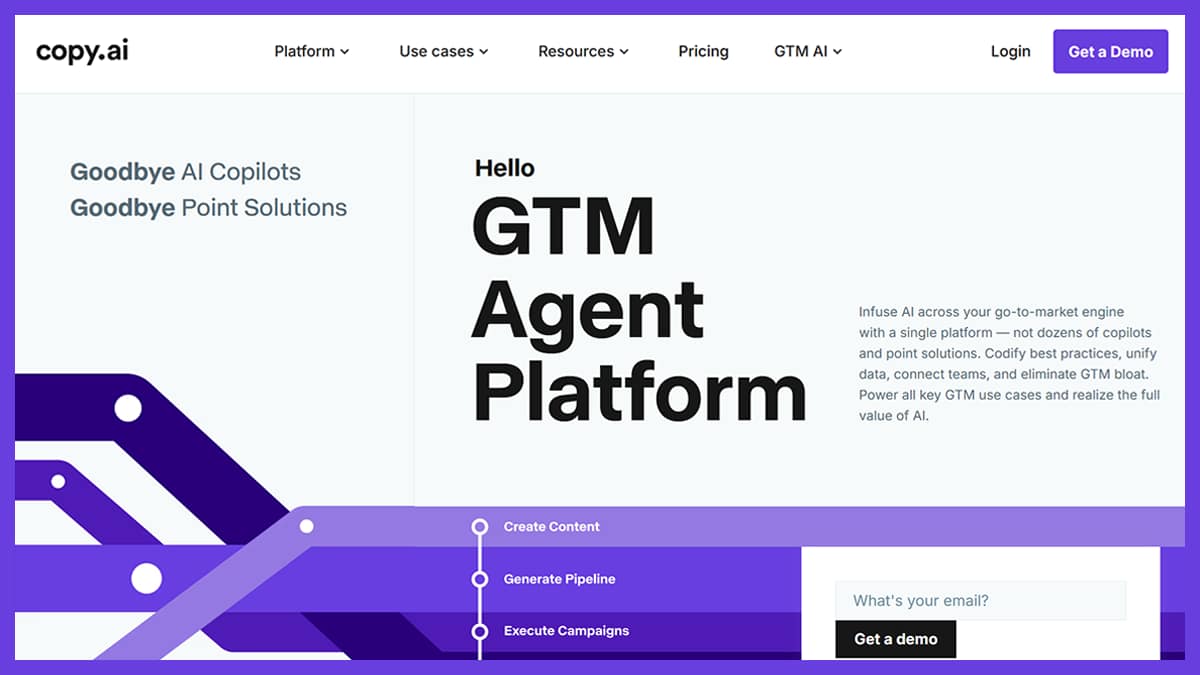
Copy.ai is built for speed and marketing efficiency, with a strong library of templates for blog posts, product descriptions, and social captions. While it’s not explicitly designed for AI search visibility, its workflows can produce well-structured marketing copy if you adapt them with visibility in mind.
The tool’s Campaign Workspace feature lets you coordinate multiple content pieces around a central theme, which can help maintain consistency and structured messaging across formats. That structure matters because AI engines tend to surface content that is cohesive, clear, and easy to parse.
If your team already uses Copy.ai for marketing campaigns, you can adapt its templates to produce FAQs, summaries, and comparison lists that align more closely with AI-friendly formats. It won’t guide you there automatically, but it can scale your efforts once you’ve set the structure.
✅ Best use case
Use Copy.ai to quickly produce structured marketing assets in bulk — especially when paired with a clear AI visibility framework.
⚠️ Limitations
Defaults to marketing tone, which may need adjustment for informational content. No native citation system or visibility scoring.
6. StoryChief
Rating: 3/5
AI-Surfacing Capable
Why it’s valuable for AI visibility
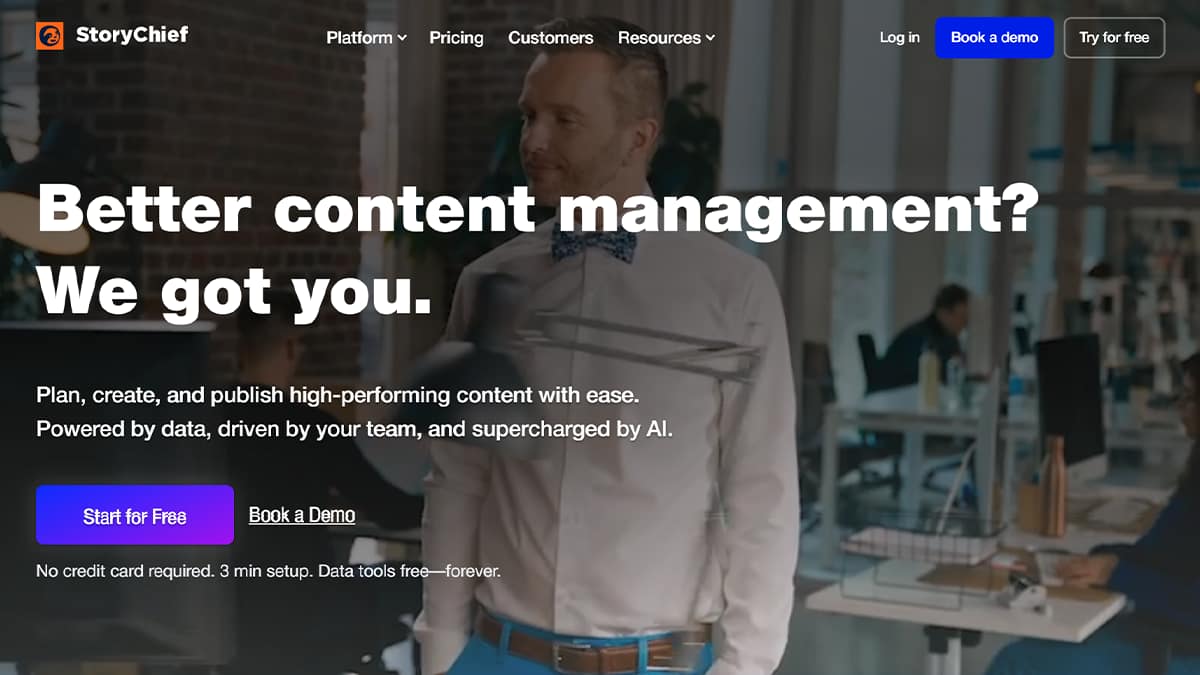
StoryChief helps you distribute content in the formats AI engines are most likely to find. While it doesn’t generate visibility-optimized content on its own, it’s a strong platform for managing and publishing structured content across multiple channels, including blogs, newsletters, and social posts.
It supports clean formatting, metadata structuring, and multi-platform scheduling, all of which improve your content’s accessibility and consistency across the web. That structure can increase the likelihood that AI engines will crawl and reuse your content, especially when combined with strong source material created in other tools.
Think of it as a distribution layer that helps the content you’ve already optimized for AI search actually get seen.
✅ Best use case
Use StoryChief to publish structured content from other tools across multiple channels in AI-readable formats.
⚠️ Limitations
Doesn’t help with content creation. Visibility depends entirely on the quality of the source content.
7. Jasper AI
Rating: 3/5
AI-Surfacing Capable
Why it’s valuable for AI visibility
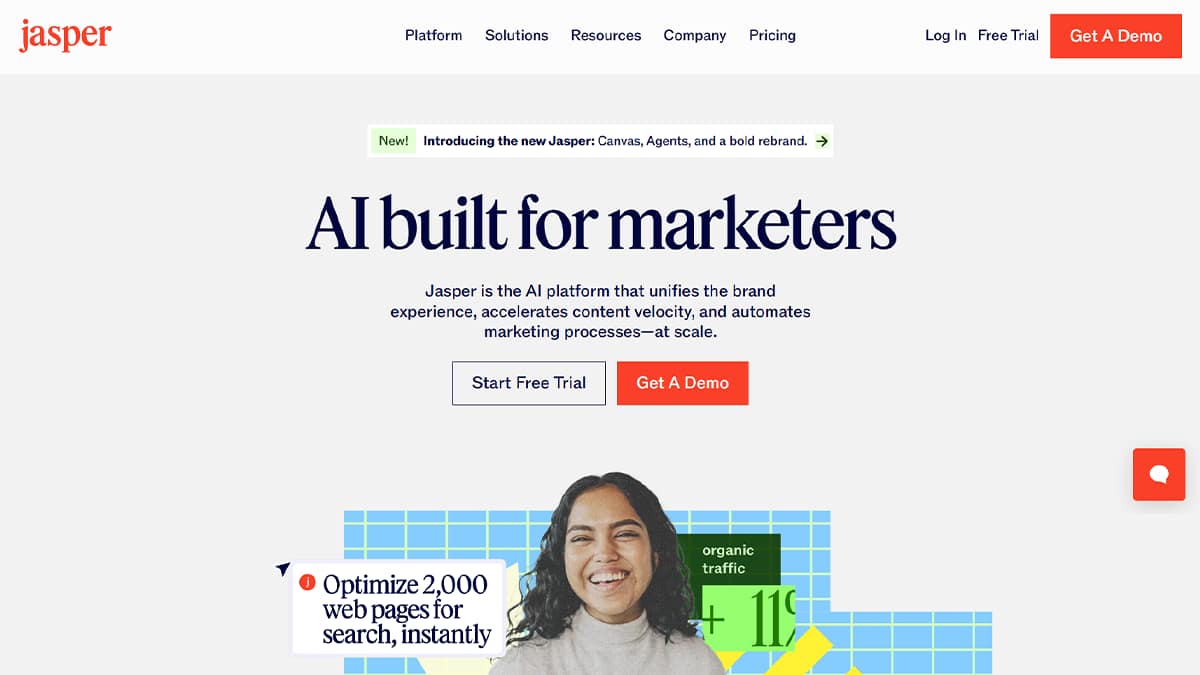
Jasper is built for speed, scale, and brand consistency. It’s especially useful for marketing teams who need to produce high volumes of content across multiple formats and campaigns. While it wasn’t designed with AI visibility in mind, it can produce structured content if the right templates and tone guides are in place.
What sets Jasper apart is its ability to enforce brand voice at scale. That’s important if you’re publishing dozens of content pieces that need to stay consistent and professional. It also integrates well into existing workflows, making it easier for teams to maintain structured formats over time.
Its value depends on how you use it. With the right setup, Jasper can help generate FAQs, product summaries, and other visibility-optimized formats — but it won’t guide you there by default.
✅ Best use case
Use Jasper to generate structured marketing content at scale when you’ve already defined your visibility strategy.
⚠️ Limitations
Structured output depends heavily on how templates are designed. Lacks native citation or AI visibility cues. It can generate basic citations when prompted, but not robustly.
8. Komo AI
Rating: 3/5
AI-Surfacing Native
Why it’s valuable for AI visibility
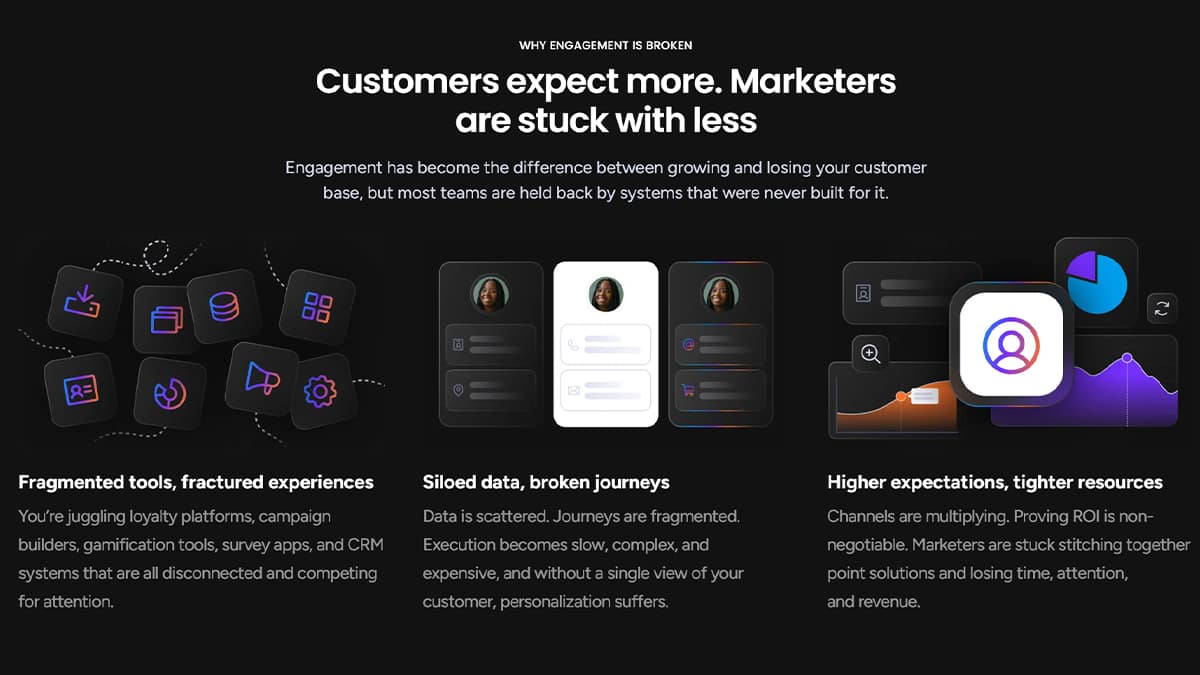
Komo is a search-first AI tool that delivers fast, structured summaries in a clean card-style layout. It isn’t as powerful or flexible as Perplexity, but its default format is aligned with how AI engines present information — short, scannable, and easy to extract.
It doesn’t go deep on citations or content depth, but for quick overviews or comparison points, it’s a solid tool to have in your visibility toolkit. Think of it as a lightweight research partner that gives you a head start on AI-formatted ideas.
It’s not meant to replace a full content strategy, but it can help you spot how information might be surfaced and structured in AI responses.
✅ Best use case
Use Komo to generate quick, structured overviews that can guide the format of your longer-form content.
⚠️ Limitations
Limited citation support. Outputs lack depth and require additional content development elsewhere.
9. PromptPerfect
Rating: 2/5
AI-Surfacing Booster
Why it’s valuable for AI visibility
PromptPerfect doesn’t create content — it makes your AI tools smarter. It rewrites and refines prompts to produce more structured, focused, and relevant outputs from models like ChatGPT, Claude, and Gemini. For brands trying to generate visibility-optimized content, PromptPerfect helps ensure that what you ask for leads to what AI engines prefer to surface.
That includes things like bulleted answers, clear comparisons, and concise formatting — all traits that improve your odds of showing up in AI-generated answers.
It’s especially useful if you’re using general-purpose AI tools (like ChatGPT) to produce structured content but aren’t quite getting the results you want.
✅ Best use case
Use PromptPerfect to refine prompts for tools like ChatGPT and Claude when generating content you want AI engines to surface.
⚠️ Limitations
Doesn’t generate content itself. Results vary depending on the model you’re using and your goals.
10. Airtable AI
Rating: 2/5
Hidden Utility
Why it’s valuable for AI visibility
Airtable isn’t a writing tool. It’s a database and workflow platform. But its AI features are surprisingly effective at turning existing content into clean, structured formats such as summaries, FAQs, comparison tables, and bulleted feature lists.
This matters for visibility because AI engines love structure. Many brands already use Airtable or a similar database platform for planning and project management. If that’s the case, you may already have a powerful AI formatting tool in your stack without realizing it.
We wouldn’t recommend buying Airtable just for this. But if it’s already part of your workflow, its AI assistant can help you transform unstructured content into formats that are more likely to be surfaced in AI-generated answers.
✅ Best use case
Use Airtable AI to transform unstructured content (notes, ideas, long paragraphs) into clean, scannable formats optimized for visibility.
⚠️ Limitations
Not a dedicated writing tool. No SEO guidance or visibility scoring. Best used as a side benefit, not a primary generator.
Final Thoughts
AI search is changing the way people find answers, and the way brands get discovered.
The tools in this list aren’t about writing faster. They’re about structuring information so AI engines can understand it, trust it, and reuse it. That’s the new visibility game.
The brands that win in AI-powered discovery will be the ones that combine:
• A clear content structure AI can easily extract
• Trust signals that prove credibility
• A focused strategy for showing up where people are already getting answers
Visibility in generative search is still new territory, but it’s not guesswork. With the right tools and approach, you can create content that’s built for this new environment from the start.
If you’re ready to stop chasing clicks and start earning placement inside AI-generated answers, now’s the time to put these tools to work. The earlier you adapt, the longer your edge will last.
Trularity researches how AI engines evaluate, rank, and surface brand information across generative search environments. Through independent testing, visibility frameworks, and analysis of emerging AI behaviors, we study the structural, semantic, and trust-based signals that influence which content gets reused in AI-generated answers. Our work helps brands create information that is scannable, credible, and aligned with the formats modern AI systems prefer. The goal is to help brands earn visibility in an environment where traditional search tactics no longer apply.