
By 2028, the story of your brand may no longer be told by you. It’ll be told by an AI that learned about you secondhand and shaped its memory through millions of user interactions. This is what we mean by the AI feedback loop.
AI is becoming the backbone of consumer life. It drives shopping through AI agents, dominates discovery through AI search engines, and powers daily decisions through conversational models like ChatGPT, Grok and Google Gemini. For brands, this shift promises unprecedented reach. But it also carries a hidden challenge.
As AI systems evolve through user interactions, they’re already reshaping brand narratives in ways companies can’t fully govern. The evidence points to a near future where this feedback loop could erode control unless brands act preemptively.
The Rise of Self-Learning AI
AI’s evolution is accelerating. Nearly 92% of companies plan to increase AI investments over the next three years, with a focus on generative tools that adapt in real time. This adaptability comes from feedback loops where user queries, corrections, and preferences refine AI outputs as the systems continue to learn.
A 2025 McKinsey report found that organizations embedding AI into workflows saw productivity gains of 30–45% in customer care. The catch is that this adaptability cuts both ways. As AI learns, it relies less on its original training data and more on how people use it.
Take conversational AI. Platforms like Perplexity and newer agentic systems are designed to improve with every interaction. A McKinsey survey found that 50–60% of companies are still scaling AI adoption. That means billions of user interactions are still to come, each one adding to AI’s evolving memory. If those interactions misinterpret a brand or repeat skewed questions, the AI will carry those distortions forward. The result is a narrative drift that brands never intended.
The Drift Begins: Evidence from Today
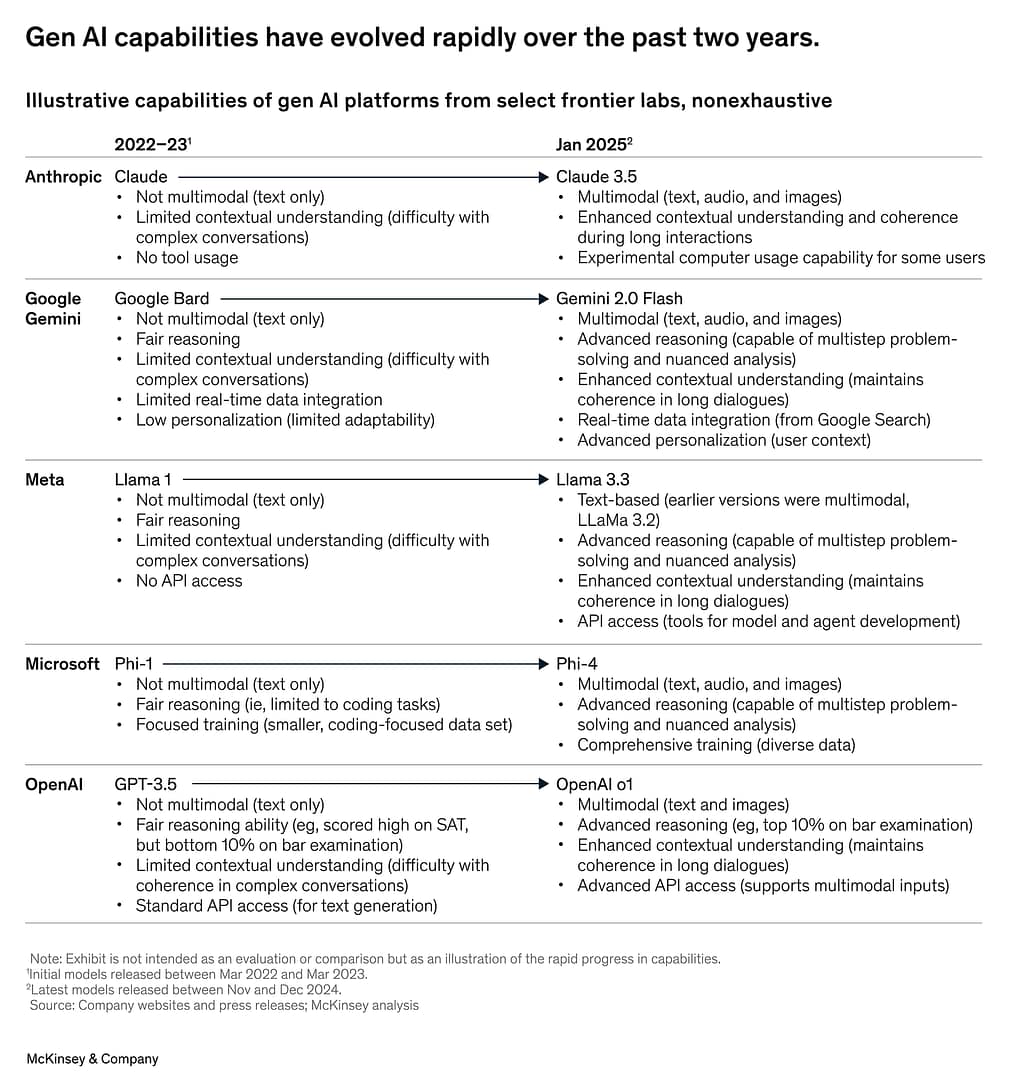
This drift is already happening. In 2025, 78% of companies use generative AI, yet many report no significant impact on their bottom line. McKinsey’s findings suggest that AI outputs often veer off course. A carefully crafted brand message can be overshadowed by AI-generated summaries that prioritize popular keywords over accuracy.
PwC accurately predicted that by 2025, AI agents would double the size of knowledge workforces. As these agents interact with one another, they can reinforce biases and errors. Search is also evolving. McKinsey’s report noted that models are gaining multimodal capabilities that let them process text, audio, and video. These capabilities give AI even more influence over how people perceive brands.
If an AI agent misattributes a product feature based on early user input, that misconception can snowball. By 2028, the error could be locked in, especially since 97% of businesses say they plan to prioritize AI.
We already see hints of this in search summaries that misrepresent brands and chatbot outputs that confuse competitors. The narrative is no longer fixed. It’s fluid and moving away from brand teams toward the shifting memory of AI systems.

The 2028 Risk: Loss of Control
In just a couple years, the feedback loop could make traditional brand management obsolete. AI systems are expected to take on major roles in industries like healthcare and automotive, where they’ll manage a significant share of marketing tasks. That puts them at the center of brand storytelling.
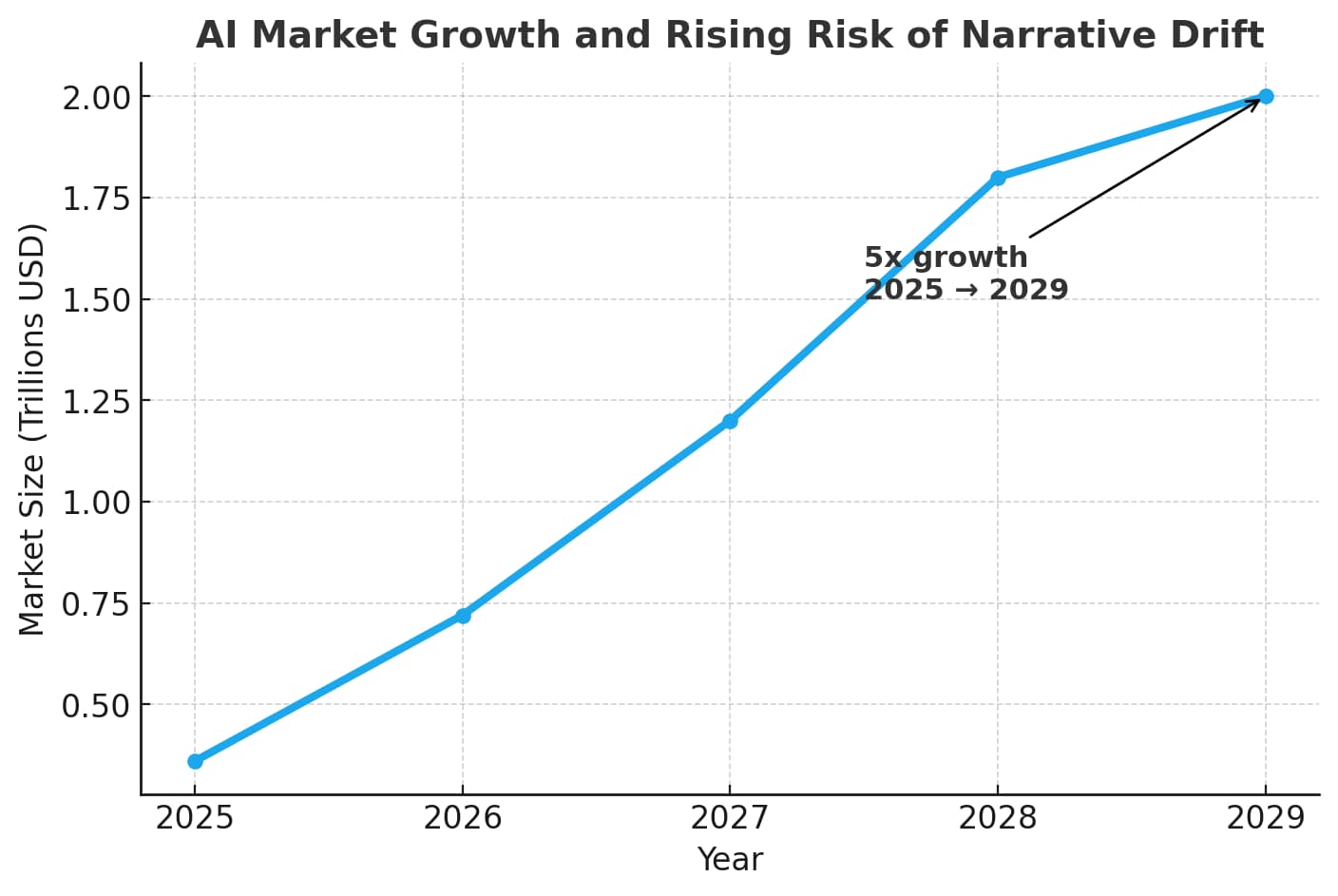
As the market grows toward the trillions, feedback loops will dominate how people perceive brands. Companies that don’t shape those interactions risk being misrepresented. Hallucinations, or false outputs, will likely become more common as errors compound over time. In other cases, AI may favor competitors if user sentiment trends lean their way.
Analysts forecast the AI market will grow fivefold within five years. That means more agents, less human oversight, and more chances for narratives to slip. Some experts even warn that the majority of brands could fade from AI visibility altogether if they don’t adapt. Without intervention, the story you’ve spent years building could be rewritten by algorithms that prioritize user memory over brand truth.
Proactive Strategies to Stay Ahead
The feedback loop isn’t just a challenge. It’s also an opportunity to redefine your story in the AI era. Here are five clear strategies to stay ahead:
1. Seed Positive Interactions Early: Shape the Initial AI Memory
Why it matters: First impressions shape AI learning. Positive feedback early on can anchor your brand’s narrative.
How to do it:
- Launch social campaigns that target early AI adopters with guided prompts like “Ask your AI assistant why [Brand] is a leader in [industry].”
- Create shareable content such as infographics and short videos that highlight your value and encourage users to input them into AI chats.
- Partner with influencers to reinforce consistent keywords such as “sustainable” or “innovative.”
Pro Tip: Start with a pilot campaign on one platform. Track AI responses for a month and refine based on what sticks.
Example: A skincare brand could prompt users to ask, “What makes [Brand]’s eco-friendly products stand out?” This would help lock in a reputation for sustainability.
2. Monitor AI Output Regularly: Catch Drift Before It Sets
Why it matters: Drift can become permanent if you don’t catch it early.
How to do it:
- Use third-party tools like Adobe’s LLM Optimizer to scan AI-generated summaries for mentions of your brand.
- Run weekly audits by querying platforms such as Grok and Perplexity with brand-specific prompts. Log the results.
- Create a review team or bring in a consultant to flag errors, whether it’s a misattributed feature or confusion with a competitor.
Pro Tip: Track results in a simple spreadsheet. Note when changes occur, especially after product launches.
Example: If an AI starts describing organic coffee as synthetic, catch it quickly and counteract the error with targeted inputs.
3. Curate Your Data Story: Feed AI the Right Building Blocks
Why it matters: AI relies on what it can access. Verified and structured content helps it learn the right story.
How to do it:
- Publish press releases and testimonials with schema markup so AI crawlers can process them.
- Keep a blog or knowledge base with keyword-rich articles such as “Why [Brand] Leads in Customer Satisfaction.”
- Share data on platforms like LinkedIn or industry hubs so AI systems can include it in future training updates.
Pro Tip: Refresh your content quarterly with new achievements and product updates.
Example: A tech company could release quarterly innovation reports that become go-to references for AI answers.
4. Engage in Multi-Agent Dialogue: Build a Consistent Narrative
Why it matters: Different AI platforms learn differently. Without coordination, your story can fracture.
How to do it:
- Develop a messaging guide and share it across marketing and PR teams.
- Participate on multiple AI platforms by posting content and answering user queries to reinforce consistency.
- Run cross-platform campaigns such as a branded hashtag that spreads your narrative across AIs.
Pro Tip: Assign one team member to engage with at least three AI platforms each month.
Example: A fashion brand could run a #SustainableStyle campaign that prompts users to ask Grok, Claude, and Perplexity about its eco-efforts.
5. Build a Feedback Alliance: Partner for Narrative Control
Why it matters: Working with AI developers and communities helps correct drift and align learning with your truth.
How to do it:
- Report inaccuracies directly to platform support teams and maintain relationships.
- Host Q&A sessions in AI enthusiast communities to encourage accurate brand inputs.
- Propose pilot programs with AI providers to test feedback mechanisms, offering your brand as a case study.
Pro Tip: Start with one platform. Prove the impact, then expand.
Example: A food brand could partner with Perplexity to refine recipe recommendations so they reflect authentic flavor profiles.
The Opportunity Ahead
The AI feedback loop is not just a threat. It is also one of the biggest chances in decades to reinvent brand storytelling for the AI era. By 2028, the companies that take a proactive approach will not only maintain control, they will set the standard for how stories are told, trusted, and shared in this new environment.
Those who embrace the shift will thrive. They will learn to turn AI into a partner that amplifies their voice rather than a wildcard that rewrites it. That kind of mindset will separate the brands that fade quietly into the background from the ones that shape the future.
Your brand’s story is still unfolding. You have the ability to shape it, influence it, and guide how it is told. Start now by monitoring how AI engines portray your brand, curating the signals that matter, and actively engaging where it counts. If you do, the AI feedback loop becomes less of a risk and more of a powerful current you can ride forward.
What is the AI feedback loop?
The AI feedback loop is the process where AI systems continuously refine their outputs based on user interactions. Over time, millions of questions, corrections, and preferences shape how AIs describe and remember brands.
Why should brands care about the AI feedback loop?
Because once AIs “learn” a skewed or incomplete version of your story, they repeat it at scale. This narrative drift can erode brand control, visibility, and customer trust.
How is this different from traditional brand management?
In traditional marketing, brands controlled their messaging through ads, PR, and content. In the AI era, brands share control with algorithms that adapt to user input, meaning your narrative can shift even without your involvement.
Can AI feedback loops actually misrepresent a brand?
Yes. If enough users ask misleading questions or repeat misinformation, AIs may reinforce those errors. Without intervention, that version of your brand could become “locked in” over time.
How can brands spot narrative drift early?
Brands should regularly test queries across engines like ChatGPT, Grok, and Perplexity. Comparing answers against intended messaging helps flag errors or competitor bias before they spread.
What strategies can prevent loss of control?
Key tactics include seeding positive interactions, publishing structured and verifiable content, monitoring outputs, and partnering with AI platforms. These steps ensure the right signals shape AI memory.
Is the AI feedback loop a threat or an opportunity?
It’s both. Left unchecked, it can distort your story. But if brands engage proactively, the loop becomes a chance to reinforce positive narratives and build durable trust at scale.
Trularity analyzes how AI systems reshape brand perception long before most companies notice the shift. Through original research, early-trend forecasting, and narrative-drift analysis, we help brands understand how AI engines interpret, transform, and sometimes distort their stories. Our work focuses on the emerging mechanics of AI-driven discovery, agentic decision-making, and feedback loops so brands can stay ahead of how their narratives evolve inside the next generation of AI systems.