
Most brands will increasingly rely on AI to help write and scale their content. This shift creates new advantages, but it also introduces a subtle risk that many teams have not yet considered. If AI-generated language gradually starts shaping the way a brand sounds over time, the voice that once felt distinct can start to drift toward a more generic tone without anyone fully noticing.
This possibility is called AI identity drift.
AI identity drift is the gradual, unintended shift between a brand’s true voice and the voice produced by AI systems over many iterations.
It doesn’t happen all at once. It comes through small stylistic adjustments that accumulate quietly. Most of these changes feel harmless. Some might even feel like improvements. But over time, the voice can begin to lose the texture that made the brand memorable. And that’s bad for business.
Of course, identity drift is not guaranteed. It’s a manageable risk. And like any risk, understanding the forces behind it is the best way to prevent it.
What is AI Identity Drift?
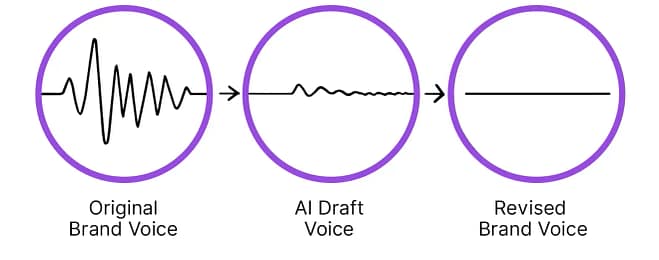
AI identity drift is the compounding distortion of a brand’s voice, tone, and personality as AI generated content becomes the primary way the brand communicates. It’s not caused by a single mistake, but by hundreds of small stylistic shifts that slowly accumulate until the brand loses its distinctiveness.
AI identity drift involves three questions.
- Is your brand still speaking in the voice you intended?
- Are AI tools reinforcing or weakening that voice over time?
- Can your customers feel the shift before your team notices it?
The danger isn’t that AI writes poorly. It’s that AI writes consistently, and consistency accelerates drift when the starting point is already misaligned. Make sense?
Let’s break it down. If AI misinterprets your tone, every future piece of content inherits that interpretation. When AI softens your edge, the next revision softens it further. And if you accept those changes without correcting them, the drift becomes the new default.
Why Identity Drift Happens
Identity drift isn’t a glitch. It’s a natural risk that emerges from the way LLMs are trained, and used in day-to-day workflows. None of these forces are harmful on their own, but together they create a quiet pressure that can gradually shift the way your brand sounds over time.
1. AI defaults to safe, neutral, balanced language unless explicitly instructed otherwise
LLMs are trained on enormous datasets filled with many styles. But the patterns they learn to favor are the ones that reduce disagreement, minimize risk, and create broad readability. This means they often select:
- neutral phrasing
- moderate emotional tone
- symmetrical sentence structures
- softened language that avoids extremes
These tendencies come from reinforcement learning itself. Models are rewarded for being helpful, polite, and uncontroversial. Over time this creates a gravitational pull toward predictable and broadly acceptable language.For brands with strong personality or sharp edges, this default setting can gradually smooth out the qualities that made the voice feel human and unmistakable. AI won’t erase personality intentionally. It simply optimizes for safety unless you clearly instruct it otherwise.
2. Writers rely on shortcuts that shift control of tone
Most teams use AI to speed up work, not to protect nuance. Prompts like “make this sound better,” “improve this tone,” and “fix this paragraph” give the model full control over the voice. The LLM chooses the vocabulary. The cadence. And what “improvement” means.
Instead of guiding AI with a defined voice, teams often outsource the voice itself. These shortcuts save time, but they introduce small tonal changes you might not notice. And if these small shifts are accepted repeatedly, the AI’s interpretation of the brand voice slowly becomes the actual brand voice.
3. Iteration amplifies drift over time
Most AI generated content doesn’t remain in its first-version form. It’s:
- rewritten
- cleaned up
- rephrased
- expanded
- summarized
- polished
- adapted for new channels
Many teams even feed the AI’s own output back into the model for subsequent revisions. Each of these adjustments introduces tiny variations in tone and rhythm. A single change is insignificant, but the changes stack. They accumulate. They move the voice away from its origin point.
Even small shifts can compound over time, especially when content goes through multiple AI-assisted revisions
4. AI tends to generalize toward the average style of its training data
LLMs learn patterns from the entire internet, which means they learn what “typical” writing sounds like across many industries. When asked to produce content in a specific category, the model draws from this broader pattern.
This is why AI often makes brands within the same space sound similar. It pulls from shared vocabulary and common structures such as:
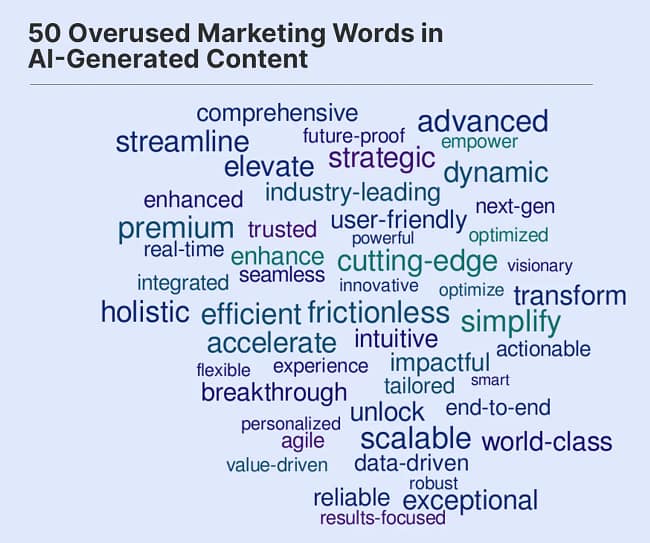
- “powerful,” “seamless,” “innovative,” “unlock” in SaaS
- “elevate,” “discover,” “designed for you” in lifestyle
- “trusted,” “industry leading,” “solutions” in enterprise
When multiple brands share the same linguistic baseline, the model blends them. The uniqueness of the brand voice gets diluted inside a larger category pattern.
5. Human acceptance of AI output reinforces the drift
One of the most overlooked forces behind drift is human approval. When teams accept the AI’s version of their voice as “good,” the model is effectively rewarded for that interpretation. Writers internalize the drifted version and use it as the new reference point for future prompts.
Human approval becomes the echo chamber.
The more drifted content is published, the more it becomes part of the brand’s visible footprint, and the more AI models in the future will learn the wrong version of the brand.
6. Drift emerges through convenience and repetition
No single factor causes identity drift on its own. Drift arises from the interaction of:
- model defaults
- prompt shortcuts
- iterative refinement
- category generalization
- human approval
- speed pressures
- increased AI dependence
This is why drift often goes unnoticed. Each part seems harmless, but together they create a quiet, consistent pressure toward sameness.
The Early Signs
Most brands don’t notice AI identity drift when it begins. The early indicators are subtle, gradual, and easy to overlook because each one seems to improve the writing. Drift usually feels like progress until the effects accumulate.
1. Vocabulary starts shifting toward generic industry language
The first signs often appear in word choice. Distinctive verbs and phrases are replaced by common industry terms like “optimize,” “streamline,” “unlock,” or “seamless.” These words read well, but they don’t belong to any one brand. They belong to everyone.
This shift isn’t intentional. It happens because AI models often choose the most statistically common phrasing unless you guide them differently. Over time, the brand’s unique lexicon starts to fade.
2. Sentences become smoother and more predictable
LLMs are optimized to produce text that’s broadly readable and well-structured. They balance sentence length, equalize rhythm, and remove irregularities that once made the brand voice memorable.
The result is writing that flows well but lacks the voice that signal human authorship. Eventually, the brand becomes easier to read but harder to recognize.
3. Humor, personality, and specificity begin to soften
Many brands have a signature attitude or emotional style. Dry and clever. Bold and direct. Playful or unusual.
AI generated revisions can gradually smooth these edges. A joke becomes a neutral line. A bold statement becomes something more cautious. Highly specific descriptions become more general.
This isn’t because the AI avoids personality. It’s because it tries to reduce risk and increase clarity unless you explicitly tell it to maintain tone.
4. “This feels better” becomes the new standard of judgment
Writers and editors naturally choose versions that read more polished or professional. When AI suggests improvements, teams often accept them because the output feels clean and optimized.
The question shifts from “Does this sound like us?” to “Does this sound good?” That opens the door to drift, because good writing and brand writing aren’t always the same.
5. Teams start losing the ability to identify authorship
A strong brand voice lets teams recognize who wrote something. As drift progresses, internal distinctions blur. Writers, editors, and AI systems all begin producing content that feels similar.
When teams can’t recognize their own voice, they usually can’t protect it either. This is one of the earliest functional signs that drift is underway.
6. Competing brands begin to sound similar
Identity drift doesn’t happen in isolation. When many brands in a category use AI tools the same way, their voices begin to converge. They adopt similar vocabulary, similar structures, and similar claims.
This makes it harder for a reader, or even an AI assistant, to distinguish one brand from another. The category develops a shared tone that pulls individual brands toward the center.
7. Customers feel something has changed even if they can’t explain it
Customers often sense shifts long before internal teams do. They feel that something in the communication is different. They may describe it as less personal, less human, or less aligned with what they expect from the brand.
This feeling is subtle, but it matters. Brands build trust through consistency, and drift weakens that trust by introducing small but noticeable changes in tone.
8. Drift begins with one word and grows through repetition
Identity drift almost never starts with a major rewrite. It starts with one word that feels slightly off. Then another. Then a sentence structure that doesn’t match the original rhythm. These minor changes multiply.
Over time, the cumulative effect pushes the brand away from its core identity and toward a voice that feels interchangeable.
Why Identity Drift Is a Hidden Risk
The risk of identity drift isn’t stylistic. It’s strategic. Brands build trust through consistency, and when the voice begins to shift, even slightly, customers feel the difference long before anyone inside the company does.
The writing may look cleaner or more polished, but something subtle feels off. This disconnect weakens the emotional link between the brand and the people who rely on it.
Drift also erodes differentiation. Voice is one of the few remaining ways for brands to stand out in crowded markets. If AI generated content nudges every brand toward the same patterns, rhythms, and vocabulary, the space between competitors begins to collapse.
Distinctiveness fades, not because the brand changed its strategy, but because its language slowly blended into the broader industry tone.
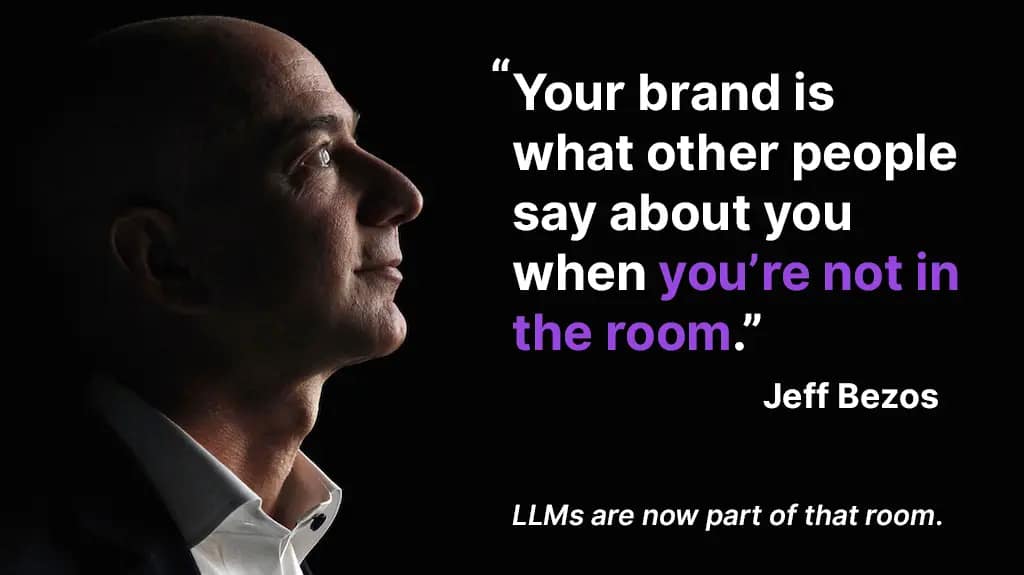
There’s also a technical consequence. AI models learn from the content you publish. If your brand voice shifts in your own materials, future models may learn the drifted version as the dominant pattern. It recalls that version in summaries, comparisons, and recommendations. A small tonal shift in content can turn into a large shift inside the model’s memory.
The challenge is that drift grows quietly. As the drifted voice shows up in content, it becomes part of the internal reference system. New writers adopt it. New AI tools reinforce it. Teams begin to treat the drifted voice as the correct one simply because it’s familiar. Reversing that pattern requires more effort than preventing it.
Identity drift becomes even more important when viewed through the lens of AI brand fidelity. Drift changes the way your brand sounds. Fidelity determines how well an AI system understands and remembers that sound.
If drift continues unchecked, the AI begins to store and recall a version of the brand that doesn’t match the one you intend. It may assign you the wrong attributes, place you in the wrong category, or interpret your strengths in ways that don’t reflect your positioning.
At that point, visibility alone can’t correct the distortion. The model isn’t misrepresenting your brand because it lacks information. It’s misrepresenting it because it learned a drifted version of your identity.
How to Prevent AI Drift
Identity drift is preventable when brand voice is treated as a fixed strategic asset rather than a flexible output that changes from prompt to prompt. Brands that set clear guardrails early can use AI confidently without losing the tone, rhythm, and personality that make their communication recognizable.
Clarify the brand lexicon
Define the words you use and the words you avoid. These lists should be specific, not conceptual. Include verbs, adjectives, metaphors, and phrases that reflect your personality. Just as importantly, call out the generic industry language you don’t want to absorb. A lexicon gives AI models something concrete to imitate and gives teams a shared foundation they can reference when evaluating drift.
Establish fixed voice anchors
Create a small collection of paragraphs that perfectly reflect your brand voice. These examples should capture tone, pacing, sentence structure, and emotional range. They don’t change over time. They act as the “north star” that both humans and AI can compare against when evaluating whether something sounds right. Anchors make drift visible.
Use AI as an adapter, not a generator
Start with a human written version of the piece in the brand’s true voice. Then let AI adjust the structure, length, clarity, or formatting. Avoid using AI to create the first draft unless the model has been given a strong voice profile. The moment AI takes creative control, drift accelerates. Keep the voice human. Let AI handle the mechanics.
Review signals regularly
Set aside time quarterly or monthly to review recent content. Look for vocabulary creep, predictable sentence smoothing, shifts in emotional tone, or the disappearance of stylistic quirks that define your voice. This process doesn’t need to be formal. A quick review across a few channels is enough to catch early patterns before they spread.
Train AI tools with a stable voice model
Don’t rely on instructions like “sound like our brand.” Provide examples, rules, patterns the AI can follow. Include the lexicon, the voice anchors, and a list of phrases to avoid. When AI knows exactly what you expect, it’s far more reliable. Without structure, it’ll make stylistic assumptions. And those often lead to drift.
Teach teams how to recognize drift
Most drift happens because writers and editors accept small changes that feel harmless. Teach teams what early drift looks like and why it matters. Give them permission to reject revisions that feel “too smooth,” “too generic,” or simply “not us.” When everyone knows how drift begins, they’re more confident stopping it before it grows.
Audit AI summaries of your brand
Ask multiple AI models to explain your brand voice. If the summaries are inconsistent, generic, or misaligned with your intended tone, drift has already begun. These audits act as a mirror, showing how AI currently perceives your identity. They’re one of the most efficient ways to measure alignment between your intended voice and the version AI carries forward.
Identity drift is always easier to prevent than to undo.
Final Thought
AI identity drift is a subtle but meaningful risk in an era where AI plays a growing role in how brands communicate. It doesn’t announce itself with sudden changes. It shows up in small shifts that accumulate quietly. These shifts influence how your brand speaks, how customers experience your personality, and how AI systems form the internal representation they draw from when describing your brand.
The solution isn’t to avoid AI. Not all. But rather, to use it with intention. Always protect the elements of voice that make your brand distinct. Connect your writing practices to a clear identity system, and treat brand voice as something that deserves the same discipline as strategy or design.
Clarity helps prevent drift before it starts. Consistency keeps the voice grounded. Precision ensures the brand that customers encounter is the same one AI learns to recognize and remember.
This becomes even more important when we consider how AI systems build internal models of brands. As we explored in our article on AI brand fidelity, the way AI stores and recalls your identity increasingly shapes how it presents you to customers.
As AI builds deeper internal models of brands, these habits matter even more. Your brand voice isn’t just something AI should imitate. It’s something AI should understand. The goal is not for AI to sound like you by accident, but to represent you with the same intention you put into creating that voice in the first place.
What is AI identity drift in simple terms?
AI identity drift is the gradual shift in a brand’s voice, tone, and personality as AI-generated content becomes part of everyday workflows. It’s not one big mistake, but the accumulation of small stylistic decisions that slowly move a brand away from its original voice.
Does AI identity drift mean AI can’t maintain a brand voice?
Not at all. Modern LLMs can maintain tone with surprising precision when guardrails are strong. Drift happens when teams give vague prompts, revise content inconsistently, or rely too heavily on AI rewrites. Drift is a risk of workflow, not a limitation of the model.
Is identity drift inevitable?
No. It’s preventable. Drift arises when brand voice isn’t clearly defined, monitored, or reinforced. With a structured voice system, consistent examples, and good habits, brands can preserve their voice even with heavy AI use.
Why does AI tend to push writing toward generic language?
LLMs optimize for clarity, safety, and statistical likelihood. That means they often favor neutral, balanced, widely used phrasing unless directed otherwise. Without explicit constraints, the model often “smooths out” the voice, which can dilute personality and specificity.
How quickly can identity drift happen?
It varies. Drift can begin with a single subtle change. A word that feels slightly off, a softened sentence, a generic phrase replacing a distinctive one. When these changes repeat across channels and revisions, the cumulative effect becomes noticeable.
Does identity drift affect how AI systems understand my brand?
Yes. As explored in our piece on AI brand fidelity, AI models build internal representations of each brand. If your voice drifts in your own content, AI learns the wrong version of your voice and may summarize or present you inaccurately.
What’s the business impact of identity drift?
Brand voice is one of the last major differentiators in an AI-saturated landscape. Drift erodes trust, weakens recognition, and blurs differentiation. This makes your brand easier to overlook or confuse with others.
Trularity explores how AI systems interpret, store, and communicate brand identity in a world where assistants increasingly mediate customer decisions. We study the hidden dynamics that shape how models learn brand voice, how that voice evolves through everyday workflows, and how accurately AI preserves a brand’s distinct personality over time. Through concepts like AI Identity Drift, AI Brand Fidelity, and AI Prompt Loyalty, we help marketers understand the deeper mechanics that influence how AI remembers and represents their brand. Our goal is to give companies the insight and tools they need to protect their identity and stay recognizable in an AI-driven marketplace.