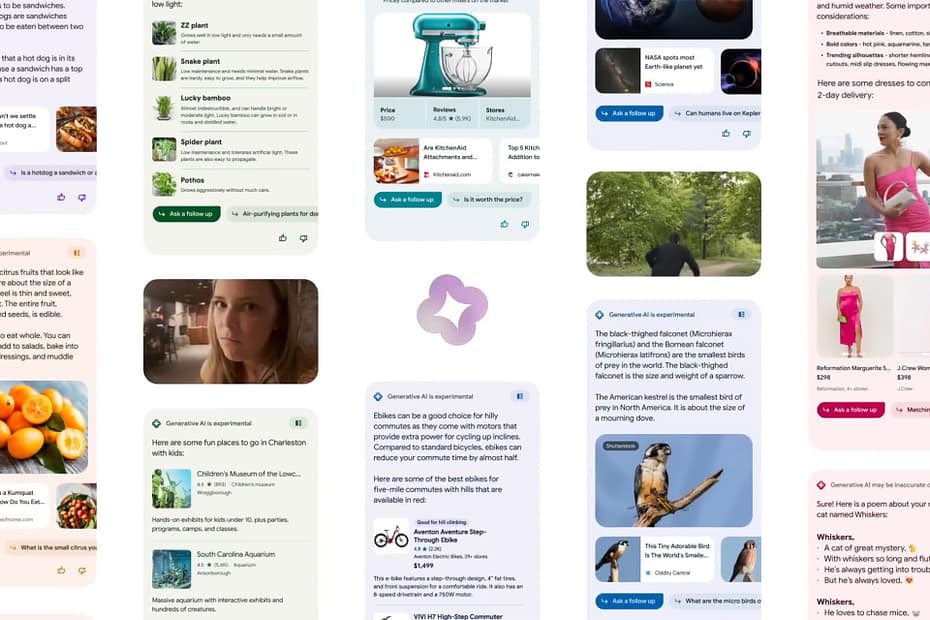
Search is changing. Fast. And if you’re still optimizing your content like it’s 2015, there’s a good chance you’re being left behind. Today, search results aren’t just links on a page. They’re full-blown answers written by AI tools like ChatGPT, Google AI Mode, and Perplexity. That’s where Generative Engine Optimization (GEO) comes in.
GEO is the strategy behind getting your brand, content, and voice to show up in AI-generated responses. Some people call it Generative Search Optimization, but the goal is the same: show up when AI answers the question.

From SEO to GEO: How We Got Here
To understand where search is headed, it helps to look at where it’s been. Traditional SEO grew up in a world of keywords and backlinks. If you picked the right search terms, optimized your meta tags, and landed a few good links, you had a solid shot at ranking. It worked because search engines were mostly matching queries to pages, not answers.
Then user behavior changed. People stopped typing “best laptop reviews” and started asking things like “What’s the best laptop for working remotely with long battery life?” Search became more conversational. Google responded by prioritizing featured snippets and “People also ask” boxes.
Now AI tools have taken it even further. Instead of giving you a list of options, they give you the answer. Right there, in the interface. And those answers are being pulled from content that’s written clearly, structured well, and trusted by the model.
That’s the world GEO was built for.
What Is Generative Engine Optimization?
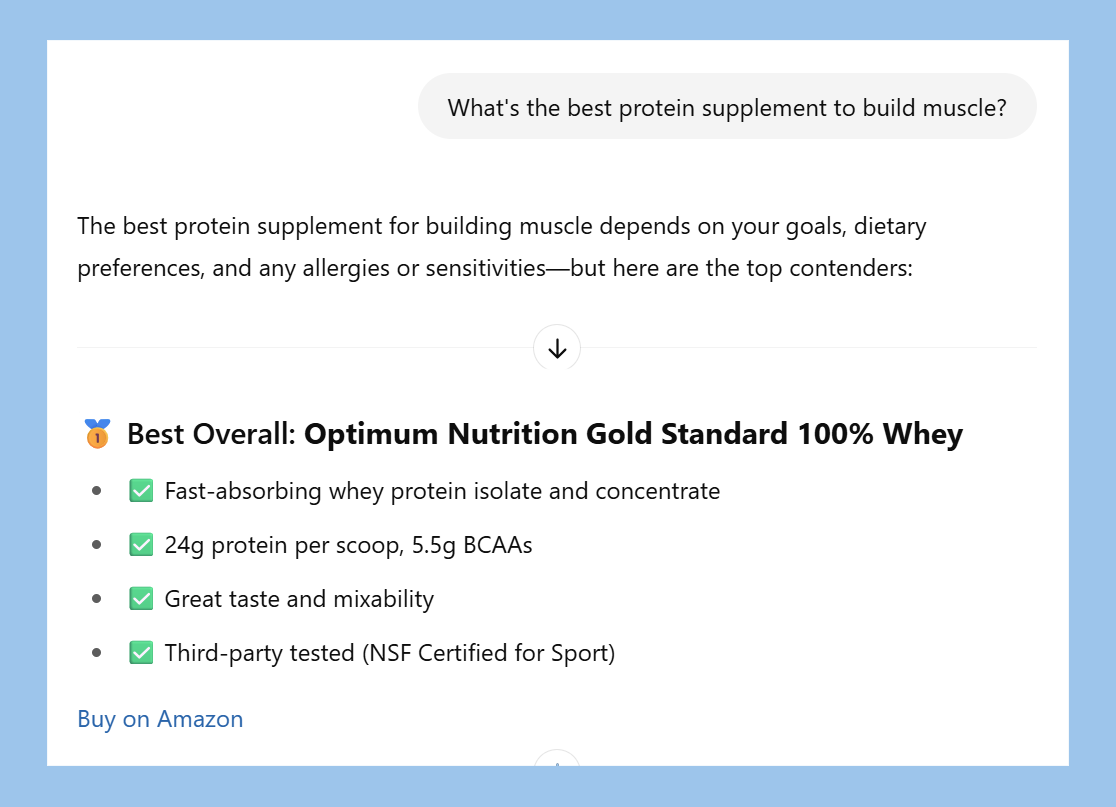
Generative Engine Optimization, or GEO, is the strategy that helps your content show up in AI-generated answers. It’s not focused on climbing a list of blue links. Instead, it positions your brand as a trusted source when someone asks a question to ChatGPT, Perplexity, or Google’s SGE.
These tools don’t just fetch results. They create full responses, pulling from multiple sources and summarizing key insights in plain language. GEO is how you become one of those sources.
To succeed, you need to rethink how content is written, formatted, and structured:
- Write with clarity so AI can easily interpret your message.
- Use smart formatting like short paragraphs, headers, and bullet points to help AI summarize your content correctly.
- Build trust through citations, clear authorship, and transparent branding. AI favors sources that feel credible and complete.
GEO doesn’t chase clicks. It earns inclusion. The goal is to become part of the answer. Not just another link people might scroll past.
Why Generative Optimization Matters Now
Search isn’t just evolving. It’s transforming.
Today’s users aren’t opening a browser and skimming a list of links. They’re having conversations with AI tools. They’re asking complex questions and expecting clear, confident answers. Fast.
Tools like ChatGPT, Perplexity, and Google’s SGE are at the heart of this shift. And they’re already influencing real-world decisions:
- A parent asks ChatGPT for the best air purifiers for a baby’s room.
- A college student uses Perplexity to compare laptops under $1,000.
- A small business owner types a question into SGE and gets a side-by-side breakdown of top CRM platforms.
And now, Amazon has entered the arena with Rufus, its AI shopping assistant built directly into the Amazon app. Rufus helps users compare products, find the best options based on personal criteria, and make informed decisions through a natural language chat interface. For ecommerce brands, this changes the game. Being visible in Rufus’s responses means your product content isn’t just competing on a listing. It’s part of a conversation at the point of purchase.
These aren’t edge cases. They’re daily habits. And every one of those moments is a chance for your brand to be part of the answer.
GEO puts your content into these high-impact interactions. If your writing isn’t structured for AI tools to read, understand, and reuse, you’re not just buried in the results. You’re invisible.
Generative engines now shape decisions, build trust, and influence what people buy, recommend, and believe. GEO makes sure your voice is in the room when it counts.

Key Elements of Generative Engine Optimization Strategy
Getting featured in AI-generated answers isn’t random. It takes strategy. GEO works best when your content checks a few specific boxes that make it easier for AI tools to read, understand, and reuse what you’ve written.
Here are the core elements to focus on:
- Content that’s easy to summarize
Generative engines need to distill information quickly. Help them out by using short paragraphs, clear headers, and bullet points. Write like you’re making it easy for someone to explain your content to a friend in one sentence. - Trust signals
AI models are more likely to reference content that feels credible. This means including clear author bios, citing reputable sources, showing publication dates, and being transparent about your business or brand. The more trustworthy your content looks, the more likely it is to be used. - Prompt-friendly phrasing
Think about how people ask questions in these tools. “What’s the best project management tool for startups?” or “How do I train for a 10K if I’m a beginner?” Your content should mirror this kind of natural, question-driven language. Answer directly and clearly, without fluff. - Brand attribution
If your brand name isn’t mentioned in the answer, you lose credit. Use phrasing that naturally includes your brand name in key statements. This helps ensure your name travels with your insights when AI shares them.
These strategies aren’t just best practices. They’re table stakes for getting noticed in the world of AI search. If you want to see how this works in action, check out our step-by-step guide on how to get your brand into AI-generated answers. GEO turns your content into a trusted resource that’s ready to be quoted, cited, and summarized.
How Generative Engine Optimization Differs From Traditional SEO
Traditional SEO was built for algorithms. GEO is built for answers.
In the old model, success meant ranking on page one of Google. That involved keyword targeting, backlinks, meta descriptions, and technical optimization. You could win visibility by checking boxes, even if the content wasn’t especially clear or helpful.
GEO flips that script. AI tools don’t crawl pages looking for the most optimized snippet. They look for content that’s easy to read, rich in context, and ready to be reused in a coherent, conversational reply.
Here’s how the two approaches differ:
- SEO rewards structure. GEO rewards clarity.
Clean HTML and headers still help, but what really matters is how clearly you communicate ideas. - SEO can be gamed. GEO demands quality.
You can still find keyword-stuffed content ranking on Google. AI engines ignore that. They favor thoughtful, useful content that directly answers user questions. - SEO focuses on clicks. GEO focuses on inclusion.
Traditional SEO tries to get users to click your link. GEO gets your message into the actual answer, which may be all the user sees.
Think of it like this: SEO gets your page in front of someone. GEO gets your voice into the conversation. Both still matter, but if you’re only playing the old game, you’re missing where search is going.

Tools and Tactics for Generative Engine Optimization Success
You don’t need a PhD in machine learning to get good at GEO. But you do need to think like someone trying to teach an AI what matters most. Here are some tools and tactics that can help your content break through:
- Test your content in AI tools
Literally ask ChatGPT or Perplexity the kinds of questions your audience would. See what comes back. If your content isn’t showing up, ask yourself why. Is it too vague? Too long-winded? Not clearly attributed to your brand? - Use structured data
Schema markup helps AI understand the context of your content — whether it’s a product, review, recipe, or how-to guide. It’s like giving AI a cheat sheet for what your page is about. - Create around prompts
Think in terms of questions. What would someone type into an AI tool to find what you offer? Write with those prompts in mind. Build content that answers them directly, with helpful phrasing and a clear structure. - Publish content that stands alone
AI often pulls from snippets that feel complete on their own. So instead of burying your best insights deep in a 2,000-word post, lead with them. Use intros, summaries, and callouts that make your points clear and quotable. - Focus on freshness
Generative engines prefer current, relevant sources. Keep your content updated, and clearly show when it was last reviewed or refreshed.
The best GEO strategies don’t just help AI find your content. They help AI trust it. The more useful, transparent, and well-structured your content is, the more likely it becomes part of the answer.
Common Generative Engine Optimization Mistakes (and How to Avoid Them)
GEO might be new, but it’s easy to fall into familiar traps from the SEO playbook. Here are a few mistakes that can undercut your visibility in AI-generated answers:
- Over-optimizing for keywords
Keyword stuffing makes content harder for AI to summarize cleanly. Instead of repeating the same phrase, aim for natural, conversational language. Focus on clarity, not density. - Burying the lead
Generative engines look for content that gets to the point. If your best insights are buried in the final paragraphs, AI may never find them. Lead with the most useful information and support it with details below. - Skipping author and brand signals
AI tools are more likely to trust content when it’s clearly written by a real person or brand. Include an author bio, explain your credibility, and use brand-inclusive language like “At [Brand], we’ve seen…” to stay visible in attribution. - Writing walls of text
Long, unbroken paragraphs confuse readers and confuse AI. Break your content into digestible chunks with headers, bullet points, and summaries that can be quoted easily. - Ignoring AI discoverability altogether
Some marketers assume GEO is “future stuff” and keep writing for the old Google. But generative tools are already influencing buyer behavior today. Ignoring them means falling behind while others learn how to show up.
Avoiding these pitfalls doesn’t just strengthen your GEO strategy. It also makes your content more useful, more engaging, and easier for both people and AI to understand.
The Future of Generative Engine Optimization
Generative Engine Optimization isn’t a passing trend. It’s the foundation of how brands will earn visibility in a search landscape driven by AI.
As tools like ChatGPT, Perplexity, and Google’s SGE get smarter, they’ll rely even more on high-quality sources that offer clarity, trust, and relevance. The content that surfaces won’t always be the content with the most backlinks. It’ll be the content that’s easiest to understand, most helpful, and most aligned with user intent.
Expect generative engines to become even more embedded in daily life. We’ll see them integrated into shopping platforms, voice assistants, research tools, and productivity apps. The brands that prepare for this shift now will be the ones that lead tomorrow.
Putting Generative Engine Optimization into Practice
Generative Engine Optimization is more than a buzzword. It’s a shift in how we think about being discovered online.
Search is becoming more conversational. Answers are being generated, not listed. Visibility now depends on how clearly, credibly, and consistently your content shows up in those answers.
The brands that thrive in this new environment won’t be chasing every algorithm tweak. They’ll be building trust, solving problems, and showing up when it counts.
GEO isn’t the future of SEO. It’s the next evolution of visibility.
If you’re ready to look at the bigger picture, take a look at our guide to AI search optimization. It shows how this fits into a broader strategy for earning trust and attention across AI-powered tools like ChatGPT, Perplexity, and Amazon Rufus.
FAQs
What is Generative Engine Optimization (GEO)?
GEO is the practice of optimizing your content so that it appears in AI-generated answers from tools like ChatGPT, Perplexity, and Google AI Mode. It focuses on clarity, structure, trust, and usefulness.
How is GEO different from traditional SEO?
Traditional SEO focuses on ranking in search engine results. GEO focuses on being included in AI-generated answers. It prioritizes readability, authority, and how easily content can be summarized and cited.
Why does GEO matter for my business?
More people are using AI tools to make decisions without ever clicking through to a website. GEO helps ensure your brand is present in those moments of influence.
How do I start optimizing for GEO?
Start by writing clear, well-structured content that answers common questions. Use headers, bullet points, and schema markup. Test how your content performs in tools like ChatGPT or Perplexity.
Do I need to change all my content for GEO?
Not necessarily. Start with your most important or highest-traffic pages. Update them with GEO principles and track how they perform in generative tools over time.
Can GEO help my brand get mentioned by name in AI tools?
Yes. If you use brand-inclusive language and provide unique, trustworthy insights, AI tools are more likely to cite your content and include your brand name in their responses.
Is GEO only for blogs and articles?
Not at all. GEO applies to any content that could be referenced by an AI model, including product pages, help docs, guides, reviews, and even video transcripts.
How can I tell if GEO is working?
Run regular searches in AI tools for questions your content answers. Track whether your brand is included in the responses. Also monitor engagement metrics like time on page, conversions, and any AI referral traffic (where trackable).
Do backlinks still matter for GEO?
Yes, but less than they used to. Generative engines care more about the clarity and trustworthiness of your content. A strong backlink profile still helps, but it’s not the main ranking factor in this new environment.
Can small brands compete in GEO?
Absolutely. Generative engines don’t just pull from big-name sites. They prioritize helpful, well-written content. Smaller brands that focus on clarity, expertise, and relevance can absolutely show up in AI-generated answers.
Trularity studies how AI is reshaping the way people search, compare, and make decisions. Our research looks at the broader customer journey, not just search results, and examines how tools like ChatGPT, Perplexity, Google AI Mode, and Amazon Rufus interpret content and choose which brands to surface. We break down the trust signals, patterns, and behaviors that influence what AI recommends, and turn those insights into practical guidance for marketers. Everything we publish focuses on helping brands show up clearly, confidently, and credibly in an AI-driven world.