If you’ve searched for the best LLM optimizer lately, you’ve probably noticed something funny. There aren’t just a few tools in this space. There are dozens. All promising to help your brand “rank” in AI answers or magically convince ChatGPT to mention you more often.
It’s a bit like sitting at a resort bar, looking at a cocktail menu with twenty variations of the same drink. They all swear they’re “the one.” They all have a clever name. But you know, deep down, they’re all working with the same ingredients.
That’s the feeling of LLM optimization right now.
Brands sense the ground shifting under them. AI is becoming the starting point for recipes, travel plans, workouts, product research, you name it. Just look at the latest ChatGPT update where it acts as your personal shopper. Tell it what you want and it pulls products, compares options, checks reviews, even explains the tradeoffs. No scrolling. No endless tabs. Just a finished answer.
In this mix of curiosity and panic, it’s easy to hope there’s a single tool out there that can fix everything for you. Flip a switch. Optimize a model. Boom, new visibility.
But that’s not how this works. Not yet anyway.
Before we talk best LLM optimization tools, we need to talk about why there are suddenly so many and what they can and absolutely cannot do for your brand.
Why You See So Many “Best” LLM Optimizers
If you feel like LLM optimizer tools came out of nowhere, you’re not wrong. A year ago, hardly anyone was talking about AI visibility. Today it feels like every week a new platform launches, each one promising clearer dashboards, deeper insights, stronger rankings, or some fresh take on how to get your brand inside an AI answer.
There’s a simple reason for the explosion. Everyone sees the shift happening, but no one wants to be late to it.
Think about how people search now. A growing number skip Google and go straight to ChatGPT or Perplexity. They ask for whatever they’re searching for. And expect a finished answer, not ten blue links. That behavior is spreading fast.
When a shift like this happens, two things follow. First, brands look for clarity. Like you, they want to know how often they show up in these AI answers, how their competitors compare, and how to improve all of it. Second, toolmakers rush in to provide a solution. Or at least something that looks like one.
That’s how you end up with twenty different dashboards that all say they’re the best LLM optimizer. Some track prompts. Analyze sentiment. Compare citations. Measure share of voice. Blend SEO with AI in a way that feels half helpful and half experimental. And some are still figuring out what the heck their real value even is.
From the outside, it looks chaotic. From the inside, it’s the natural beginning of a new ecosystem. A gold rush, but without the gold map. Everyone knows there’s value somewhere in these models. Everyone wants to help brands surface in them. And everyone’s trying to define the rules of this new game as they build their product.
Which is why it’s important to look at all these tools with the right mindset. The volume doesn’t mean the space is mature. It means the space is young and wide open. And that tells us something important about how you should think about LLM optimization in the first place.
The Honest Truth About the Magic Button Myth
Whenever someone says they’re looking for the best LLM optimizer, there’s usually a quiet hope behind the question. What they’re really asking is, “Which tool is going to fix this for me?”
And we get it. If you’re a brand owner, the idea is pretty appealing. Buy the right software, flip a couple settings, and suddenly ChatGPT starts talking about you the way you talk about yourself. It feels like that perfect solution has to exist somewhere out there.
But here’s the honest version you’re probably not getting from most roundups. There isn’t a magic button that makes AI understand your brand. Not today. Not in the way people imagine. And buying an optimizer won’t suddenly rewrite the way these models think.
An LLM doesn’t “learn” who you are from a subscription. It doesn’t memorize your positioning statement because a dashboard told it to. Or suddenly treat you like an authority because you added a few prompts to a tracking tool.
It understands you based on your signals. The content you publish. The consistency of your message. The structure of your product data. The clarity of your voice. The reputation you’ve built across the open web.
That’s the part many brands skip when they’re shopping for tools. They want the optimizer, but they haven’t created anything for the optimizer to amplify. It’s like buying a high-end microphone when you’re not even sure what song you’re trying to sing.
This is where a lot of frustration comes from. Brands try a tool, they expect instant visibility in AI answers, and then they feel discouraged when nothing happens. But nothing is wrong with the tool. The foundation just isn’t ready for it.
That’s the real truth. LLM optimization starts long before the software enters the picture. It starts with who you are, what you want AI to say, and how consistently you express it across everything you publish. The tool only comes in once that part is real and stable.
So if there’s one thing to understand about this new world of AI visibility, it’s this. Tools can measure, monitor, and guide. But they can’t invent your identity or fix the gaps in it. They can’t override messy content or confusing product pages. They can’t stand in for the work only your brand can do.
Once you understand that, choosing an optimizer feels a lot less stressful. You’re no longer searching for the magic button. You’re searching for the tool that matches the system you’ve already built.

What LLM Optimizers Actually Do When They’re Used Well
Now that we’ve cleared the magic-button fantasy off the table, we can talk about what these tools really do. And the funny thing is, once you strip away the hype, they actually offer something pretty valuable. Just not in the way people usually expect.
Think of an LLM optimizer as a mirror. A very smart mirror. One that reflects how AI sees your brand today, not how you hope it sees you. It shows the patterns, the gaps, the mentions, the misses, the moments where competitors show up instead of you, and the places where your content simply isn’t strong enough for a model to grab onto.
When you’re using these tools well, you’re not trying to force a model to care about you. You’re trying to understand how the model currently interprets the signals you’ve been putting into the world. And that part is incredibly helpful.
Here are the things these platforms actually excel at:
- They show you how often you’re mentioned in AI answers.
Not the guess in your head. The real number. Sometimes it’s flattering. Sometimes it’s a wake-up call. - They help you see who else appears in those answers.
This is the part brands love and hate. A competitor shows up as the expert when you feel you should have been the authority. Painful, but very useful information. - They reveal the prompts and questions where you do show up.
Sometimes it’s exactly what you’d expect. Other times it’s completely random and teaches you something new about how AI interprets your content. - They highlight the sources AI relies on to talk about your space.
This part matters. If AI keeps citing certain websites and not yours, the optimizer makes that obvious right away. - They track sentiment and positioning.
Are you portrayed positively? Are you described the way you describe yourself? Does AI think you’re premium when you’re not, or vice versa? These tools show that dynamic in real time. - They help you monitor changes over time.
This is huge. AI search is not static. The responses shift as models update and your competitors publish new content. These dashboards keep you from falling asleep at the wheel.
When you look at it this way, the value becomes clearer. An LLM optimizer is not the thing that lifts your visibility. It’s the thing that tells you where the visibility truly stands. It helps you view your current standing in an environment that feels impossible to measure without help.
Used well, these tools guide strategy. They sharpen your sense of reality. Help you aim your efforts instead of guessing or hoping your content will land. They give structure to what would otherwise feel like chaos.
When a brand already has a strong foundation, these tools really shine. Because now you’re not trying to invent authority, you’re trying to amplify it. You’re not hoping for mentions, you’re clarifying the paths where mentions already make sense. And that is exactly when optimizers start to feel less like mirrors and more like accelerators.
Which brings us to the messy but important part. If these tools do all this, and they really can help brands understand their position inside AI search, why are there so many of them? And how do you make sense of that expanding landscape without getting overwhelmed?
That’s where we’re heading next.
A Quick Tour of the LLM Optimizer Landscape
By this point, you might be wondering how many LLM optimization tools actually exist. The short answer is: a lot.
This space is growing fast because every tech company sees the same opening. AI is becoming the new front door to information, so naturally everyone wants to build the product that helps brands walk through that door first. The result is an explosion of dashboards, trackers, analyzers, monitors, glossaries, and new acronyms that seem to multiply every month.
If you step back a little, the whole thing starts to look like a young ecosystem that’s trying to find its shape. Think early SEO, but even more experimental. Everyone knows there’s value in this space. No one agrees on the exact recipe yet. That’s why we’re seeing such a wide variety of tools, each trying to solve the AI visibility challenge in a slightly different way.
Let’s give you a sense of the landscape, at a very high level. Here are the types of tools you’ll find out there:
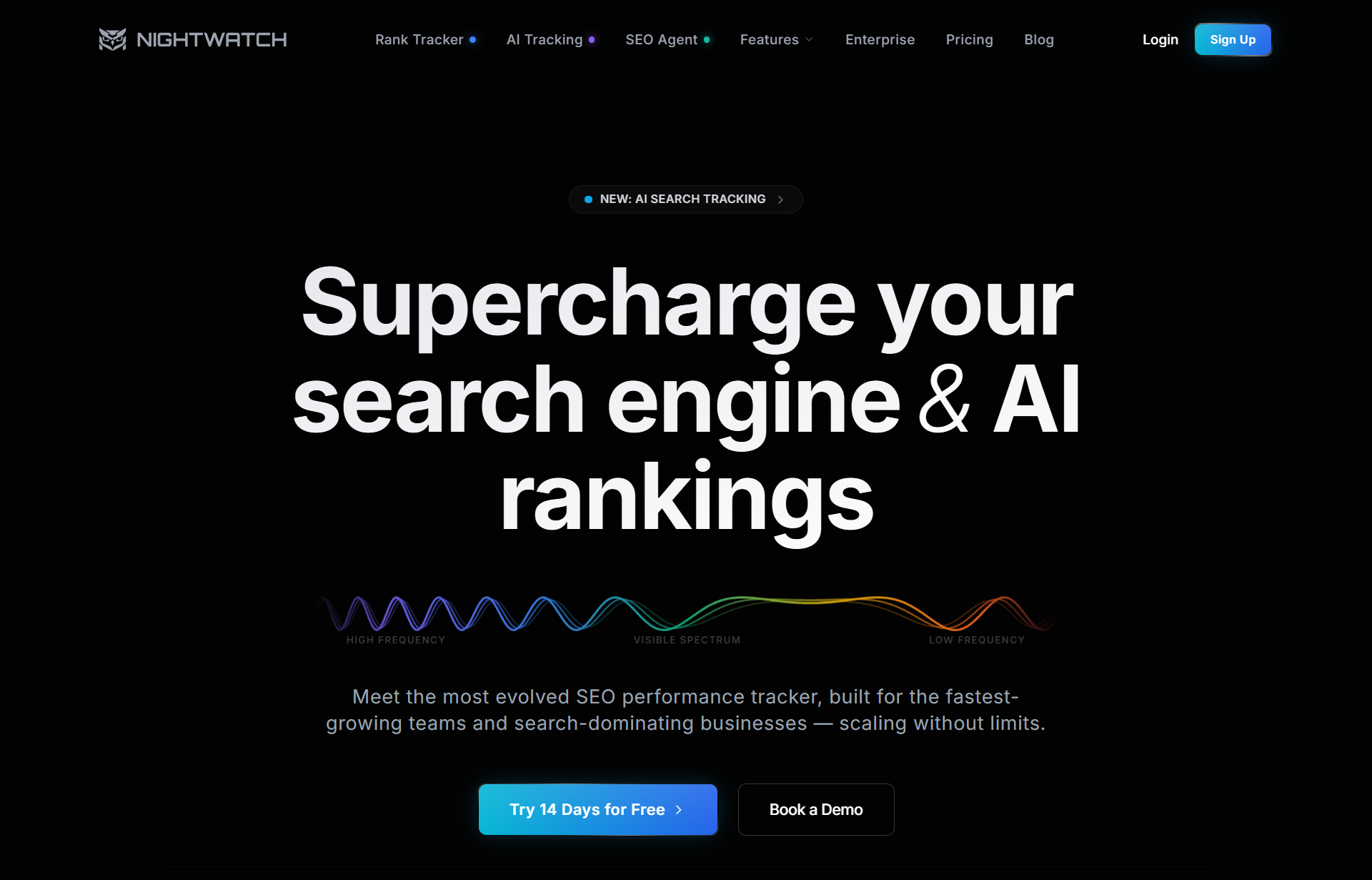
The SEO veterans expanding their expertise into AI visibility
Think Surfer or Nightwatch. They know search better than most companies, so they’re extending that knowledge into the AI world.
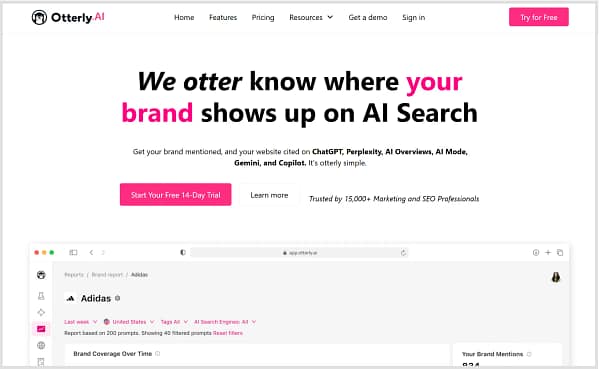
The AI-first startups built entirely around monitoring your presence in AI answers
Otterly AI is a good example here. They built their product around the idea of watching AI responses in real time and showing brands exactly how often they appear, how they rank, and what prompts surface them. These tools watch every answer and every citation like hawks because that’s their whole mission.
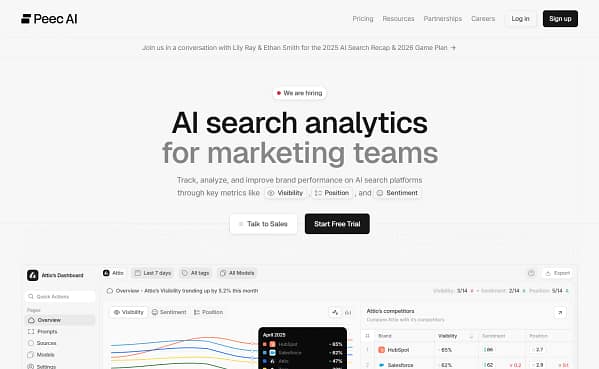
The enterprise platforms blending AI observability with competitive intelligence
Tools like AthenaHQ or Peec AI fall into this camp. They have sleek dashboards, lots of filters, and plenty of data to poke around in.
The detective-style tools with playful branding and sharp insights
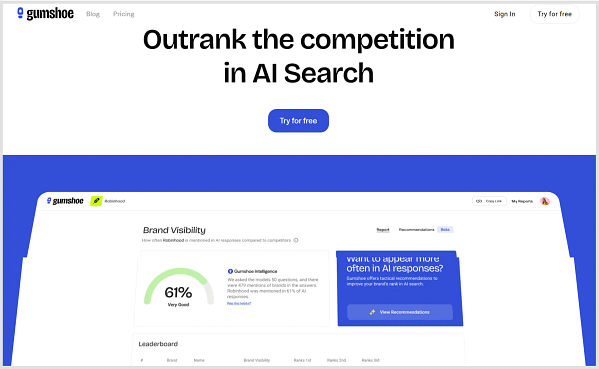
Gumshoe comes to mind. The name is fun, but the insights are serious. These tools often offer personas, topic breakdowns, or unique twists you don’t see elsewhere.
The major tech companies capable of reshaping the entire category overnight
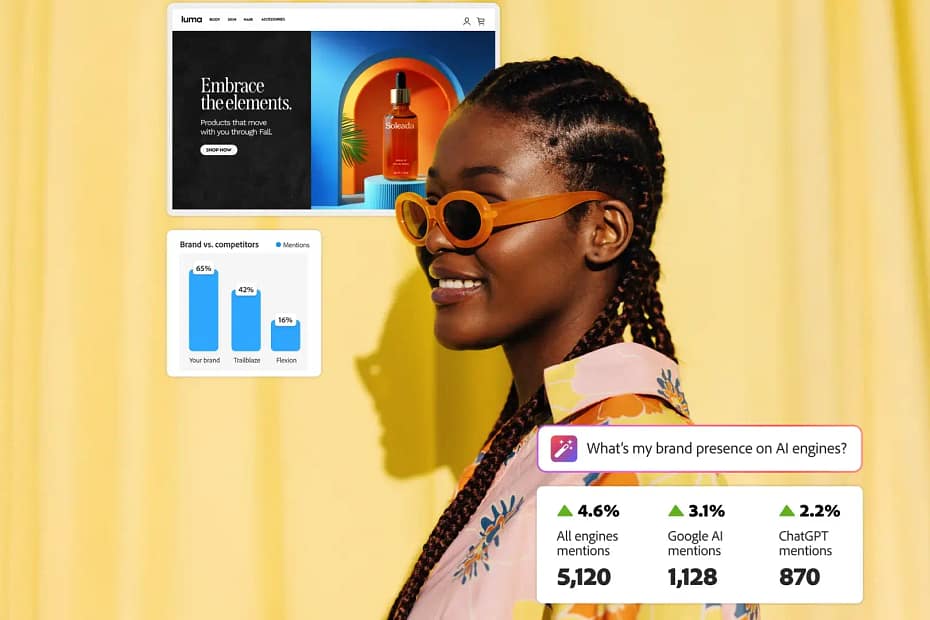
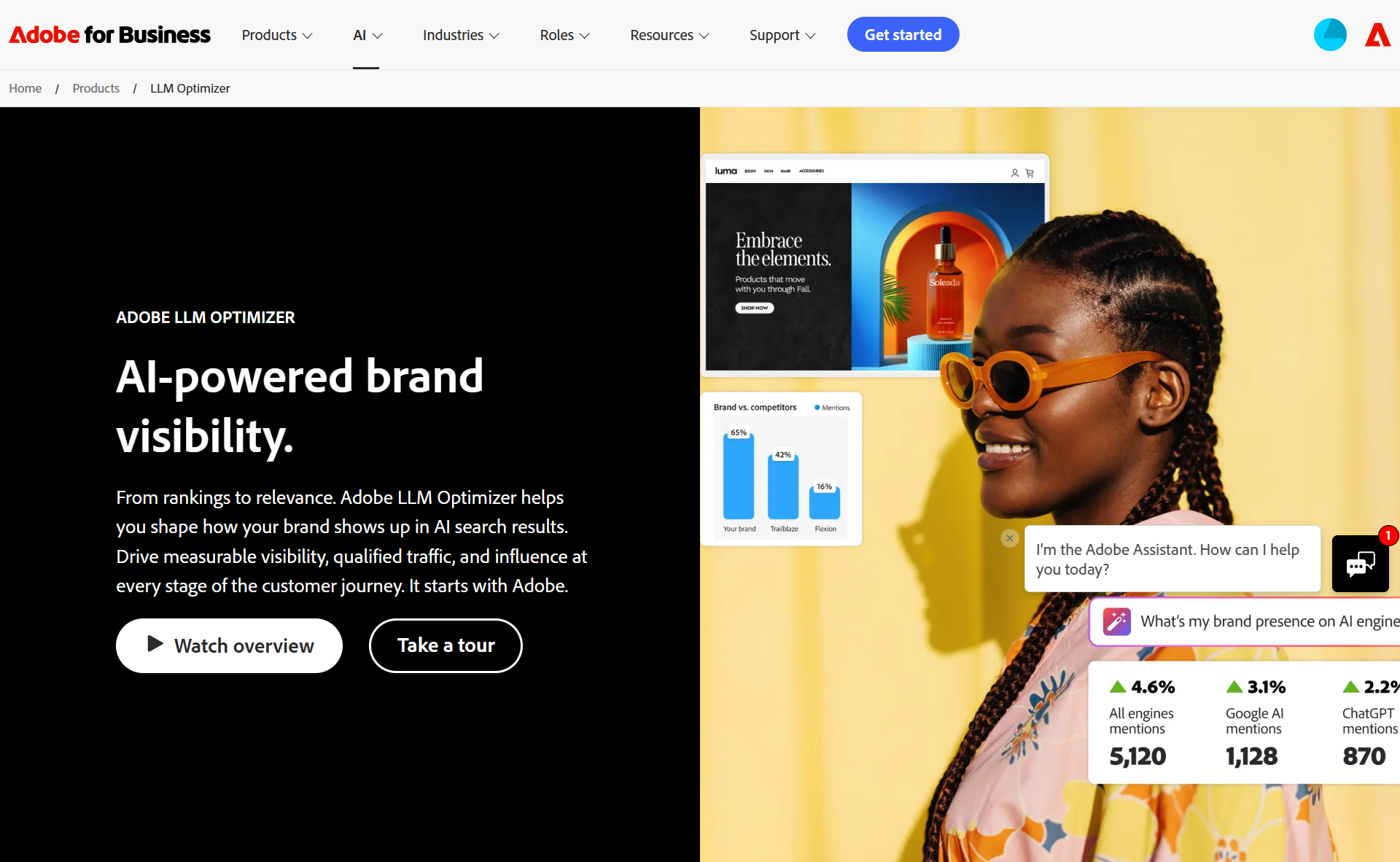
Adobe is one of them. When Adobe steps into a space, people pay attention because they have a long track record of reshaping how creative and marketing work gets done.
Could we list every tool? Sure. But that wouldn’t help much. The important thing is that this growing list tells you something valuable about where the world is heading. Brands want clarity in AI search, and toolmakers are racing to deliver it. Some products will evolve into category leaders. Others will fade, merge, even reinvent themselves three more times before they land on the right idea.
The point is, you don’t need to chase every tool. You just need to understand the landscape well enough to know what type of tool fits your goals and your current level of brand clarity.
Because the list will keep growing. And you don’t want your strategy to shift every time a new logo hits your feed.
In the next section, we’ll call out one platform that’s worth paying attention to, simply because of the weight behind it and the direction it signals for the entire space.
Why Adobe LLM Optimizer Probably Deserves the Spotlight
If you forced us to choose one LLM optimizer that you should at least keep an eye on, it’d be Adobe. Not because they’ve magically solved AI visibility or cracked some secret code, but because of something much more practical. Adobe actually has the weight, the history, and the customer base to turn this whole space into something real.
Think about it. Adobe has spent decades shaping how creative work gets made. Photoshop, Illustrator, Premiere, InDesign, Acrobat. Many of their tools became the gold standard for entire industries because they took complicated workflows and made them reliable. When they enter a new space, they tend to stay there and refine it until it works for real businesses, not just early adopters.
That matters. A lot of the tools in this space are young. Some have great ideas, but they’re still small teams trying to move very fast. Adobe, on the other hand, has the infrastructure to build something stable. They have enterprise support. They have trust. They have the patience to evolve the product instead of chasing whatever is trendy that month.
This doesn’t mean Adobe is perfect. It’s still the early days. The product is evolving. The metrics will mature. But the direction is right. They’re building something that feels like it belongs inside a real brand workflow, not something you poke at once a month when you remember you’re supposed to be watching your AI visibility.
What Adobe LLM Optimizer Actually Does (And Why That Matters)
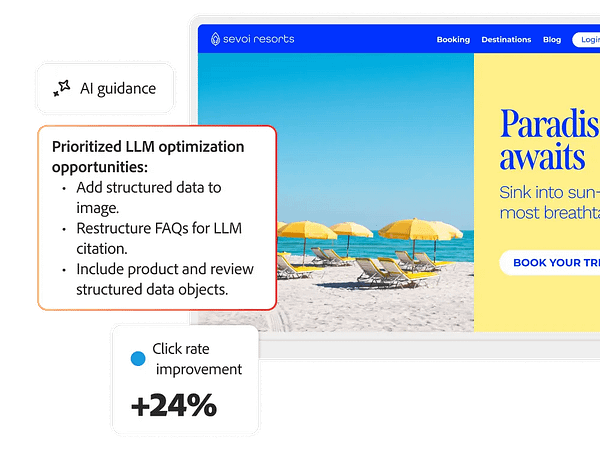
Adobe’s LLM Optimizer doesn’t try to “hack” AI systems or promise guaranteed mentions. Instead, it focuses on something far more realistic: observability.
At its core, the platform is designed to help brands understand how LLMs currently interpret, cite, and surface them, and where real-world improvements can be made.
This philosophy shows up clearly in how the dashboards are structured.
Brand Presence Dashboard: Where and How You Show Up in AI Answers
The Brand Presence dashboard is the heart of Adobe’s LLM Optimizer. This view answers a simple but crucial question: when AI systems talk about your category, do they talk about you at all?
Here, Adobe tracks:
- How often your brand is mentioned in AI-generated answers
- Which topics and prompts surface your brand
- How your mentions compare to competitors
- Whether those mentions are improving or declining over time
What’s especially useful is that this isn’t framed as a vanity metric. A high mention count isn’t treated as a win on its own. The dashboard encourages you to look at patterns: where your brand appears, where it doesn’t, and which competitors consistently outrank you in AI recall.
This aligns closely with reality. AI systems don’t randomly mention brands. They repeat what they’ve seen reinforced across content, citations, and trusted sources.

Opportunities Dashboard: Translating Gaps Into Action
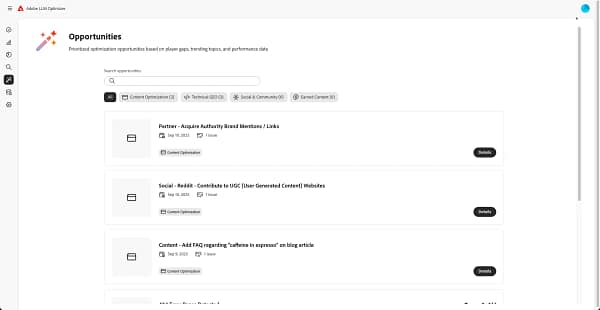
Many AI visibility tools stop at reporting. Adobe goes a step further by attempting to translate gaps into specific optimization opportunities.
The Opportunities dashboard surfaces recommendations across areas like:
- Content optimization
- Technical and structured data improvements
- FAQ restructuring for better citation
- Authority and earned media gaps
These suggestions aren’t positioned as guarantees. They’re framed as signals worth strengthening, based on where AI systems appear to struggle with your content or where competitors are outperforming you.
In practice, this feels less like an SEO checklist and more like a prioritization layer. It helps teams decide what’s worth fixing first, instead of chasing every possible optimization.
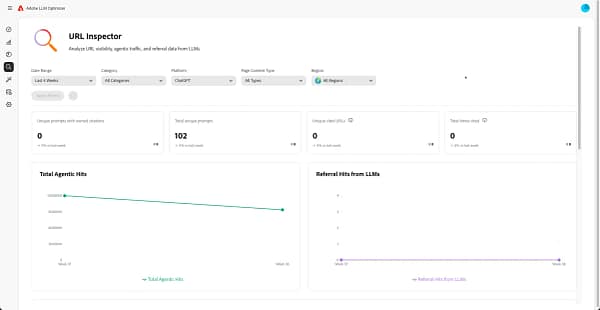
URL Inspector: Seeing Which Pages AI Actually Cites
One of the more practical features is the URL Inspector. This dashboard lets you analyze individual URLs to see:
- Whether they are being cited in AI-generated answers
- How often they appear across prompts
- Which platforms (like ChatGPT) are referencing them
- How citation performance changes over time
This is especially helpful because AI systems don’t treat all pages equally. Product pages, guides, FAQs, and explainers behave very differently in AI retrieval.
The URL Inspector makes that visible. You can quickly see which pages AI trusts and which ones are effectively invisible, even if they perform well in traditional search.
Referral Traffic Dashboard: Measuring Human Impact, Not Just AI Mentions
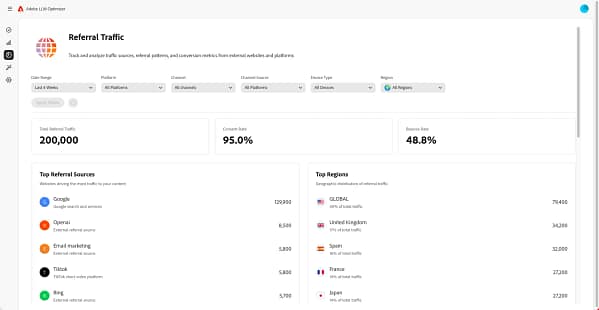
One of Adobe’s smarter moves is separating AI mentions from human behavior. The Referral Traffic dashboard tracks what happens after an AI system cites you:
- How much traffic is coming from AI-driven referrals
- Which platforms are sending visitors
- Engagement signals like bounce rate and consent rate
- Geographic distribution of that traffic
This matters because AI visibility only matters if it leads to real outcomes. A brand can be frequently cited but poorly positioned, resulting in low-quality traffic or high bounce rates. This dashboard keeps the focus on business impact, not just exposure.
Agentic Traffic Dashboard: Understanding Automated Interactions
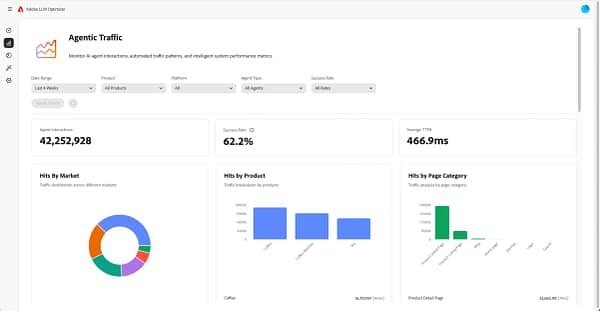
The Agentic Traffic dashboard is where Adobe starts addressing a newer reality: AI agents interacting with content on behalf of users. Here, brands can monitor:
- Automated agent interactions
- Success rates of those interactions
- Performance metrics like response time
- Which products or pages agents engage with most
This isn’t something most marketers are actively optimizing for yet, but it’s an important signal of where the ecosystem is heading. As AI agents become more common in research and purchasing workflows, understanding how they interact with your site will matter.
Adobe’s approach here feels intentionally early but forward-looking.
Why Adobe’s Entry Signals Something Bigger
Adobe entering LLM optimization isn’t just about one product. It’s a signal that this space is moving beyond experimentation and toward operational reality.
When a company like Adobe invests here, it suggests that AI visibility will eventually live alongside analytics, content management, and brand measurement. Not as a separate gimmick, but as another layer teams need to understand and manage.
Adobe brings stability to a space that’s still forming. Experience to a problem that’s still being defined. And patience to build something that fits inside real workflows instead of chasing short-term excitement.
That doesn’t mean Adobe has everything figured out. The product will evolve. The metrics will mature. The models will change.
But the direction is right.
Adobe isn’t trying to tell AI what to say. They’re helping brands understand what AI already believes, and why. And right now, that’s exactly what LLM optimization needs to be.
What Brands Need to Understand Before Using Any LLM Optimizer
Before you sign up for any tool, whether it’s Adobe or a brand new startup promising a perfect dashboard, there are a few things that you should understand. These are the truths that sit underneath everything in this space. They matter more than which platform has the prettiest charts or the most filters. They’re the pieces that actually shape how AI sees you.
Truth #1
AI can only understand what you consistently put into the world. If your content is scattered, your voice changes from one page to the next, and your product data is confusing or outdated, no optimizer can clean that up for you. Models learn by pattern. If your patterns are fuzzy, your presence inside AI answers will be fuzzy too.
Truth #2
Visibility is tied to clarity, not volume. Publishing endless content with mixed messages doesn’t help. AI isn’t impressed by how much you write. It cares about how clearly and consistently you communicate your identity. A small brand with tight, coherent content will often surface more reliably than a big brand with a sprawling, unfocused footprint.
Truth #3
Tools can show you where you stand, but they can’t stand in for strategy. They can tell you that you never show up in prompts related to your space. Show you who is dominating those answers instead. Reveal which of your competitors AI seems to trust more. But they can’t tell you how to become the brand that deserves those mentions. That part still belongs to the foundation you’ve built.
Truth #4 (this one surprises most)
AI search reflects reputation more than intent. You might desperately want to be the go-to brand in your category, but if AI sees stronger signals coming from others, it will choose them. That’s not personal. That’s pattern recognition. And the way you shift that pattern is by strengthening your signals, not by buying more dashboards.
Truth #5
You have far more influence over AI visibility than you think. Not through tricks or hacks, but through the same things that have always mattered. Clear messaging. Strong positioning. Honest expertise. High quality content. Consistency across your entire digital footprint. When you give AI something solid to latch onto, it shows up in the answers.
Once you understand these pieces, the whole conversation about LLM optimization feels different. You’re no longer looking for a shortcut. You’re building the kind of brand that AI can recognize and recall because the signals you put out are impossible to misunderstand.
Tools help. They bring clarity and structure. They show you where you’re strong and where you’re invisible. But the real work is still human work. It’s your story, your tone, your expertise, your consistency that teaches the machines who you are.
The Cocktail Napkin Framework for LLM Optimization
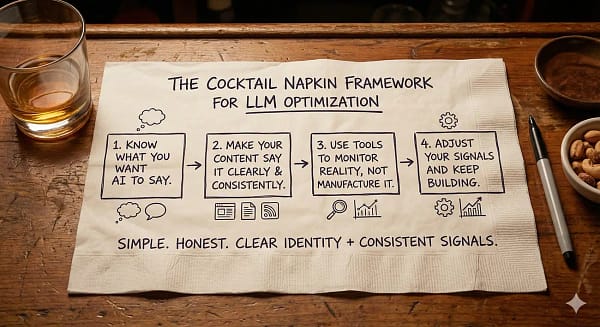
If you were sitting across from us at that bar and asked how to actually approach LLM optimization without getting lost in all the noise, we’d probably grab a napkin and sketch something simple. Not a funnel. Not a fancy diagram. Just four steps that get to the heart of it.
It would look something like this.
- Know what you want AI to say about you.
This sounds obvious, but a surprising number of brands skip it. If you don’t know the message you want to show up in AI answers, the models won’t know it either. Clarity comes first. Who are you, really. What makes you different. What should someone walk away believing after they hear your name. - Make your content say it clearly and consistently.
This is where most of the work happens. If your website, product pages, emails, social posts, and press releases all sound like they were written by five different people with five different ideas, AI has no chance of forming a clear picture of you. Consistency is the thing that teaches models how to recognize your voice. - Use tools to monitor reality, not manufacture it.
This is the role of the optimizer. It shows you how the world of AI currently sees you. It highlights your strengths and the places you vanish entirely. It helps you understand how your competitors appear. But it doesn’t create reputation. It reveals reputation. That distinction matters more than anything. - Adjust your signals and keep building.
Once you see the gaps, you can strengthen the parts of your brand that feel unclear. You can refine your messaging. You can update content that’s outdated or confusing. You can improve the signals that models rely on. And over time, those adjustments add up. AI begins to talk about you in a way that feels familiar and accurate because you’ve taught it to.
That’s the cocktail napkin version. Simple, honest, and far more helpful than chasing the next shiny thing. You don’t need twenty tools. You just need a clear identity, consistent signals, a good sense of how you show up today, and the willingness to keep tuning the pieces that matter.
Closing Thoughts About Finding the Best LLM Optimizer
By now, you can probably see why this space feels so crowded and confusing. There are a lot of tools, a lot of dashboards, a lot of new features. And a lot of people hoping one of them will finally make AI search feel predictable. It’s tempting to think the right optimizer will solve everything.
But the reality is friendlier than that. Your visibility in AI answers isn’t determined by a single subscription. It’s shaped by the signals you send out every day. Tools help you see the picture, but you’re the one who paints it.
AI search is evolving fast. It’ll keep changing. New tools will appear. Some will get better. Some will disappear quietly. But strong brands will always have an advantage because AI learns from the same thing humans do. Clarity. Consistency. Trust. Signal strength. A point of view that doesn’t wobble every time a new tool hits your inbox.
If you stay focused on that, everything else becomes easier. You’ll be ready for the future of AI search no matter how the technology shifts, and the optimizer you choose will feel like a partner, not a crutch.
And if we were really sitting at that resort bar, this is probably the moment when we’d lean back, take a sip, and say something simple. Something true.
AI isn’t trying to ignore your brand. It’s trying to understand it. Give it something solid to work with, and it will.
What is an LLM optimizer?
An LLM optimizer is a tool that helps you understand how your brand appears inside AI-generated answers from systems like ChatGPT, Perplexity, and Claude. These tools track your visibility, your competitors, the prompts that surface you, and the signals AI is using to describe your brand. They do not rewrite the model. They reveal how the model already understands you.
Can an LLM optimizer improve my AI visibility overnight?
No. LLM optimizers are not switches you flip. They can't force a model to mention you or treat you as an authority. Your visibility is shaped by the brand signals you send into the world. If those signals are weak or inconsistent, the optimizer can't fix that. What it can do is show you where the gaps are so you can strengthen them.
What should I look for in the best LLM optimizer?
Look for a tool that matches your actual needs. If you want ongoing visibility tracking, choose a platform that monitors mentions and citations in real time. If you need competitive intelligence, choose one that highlights how your category is represented in AI answers. The best tool is the one that makes your strategy clearer, not the one with the most features.
Why did you highlight Adobe's LLM optimizer in this article?
Adobe has the stability, resources, and long-term footprint to shape this entire category. The tool is still evolving, but Adobe has a history of turning early ideas into robust, widely adopted products. Their entry into this space signals that AI visibility is becoming a core part of the marketing stack, not a passing trend.
Do smaller tools still matter if a major player like Adobe is involved?
Yes. Smaller tools often innovate faster and offer features Adobe may not prioritize yet. Platforms like Otterly, Gumshoe, Peec AI, and others provide valuable insights and creative approaches. You don't need one tool to rule them all. You need the tool that fits your current goals.
Can an LLM optimizer teach AI to understand my brand better?
Not directly. An LLM learns from the broader web, not from dashboards or subscriptions. To shape how AI describes you, you need strong brand signals. Clear messaging. Consistent content. Accurate product data. Authentic expertise. The optimizer shows you whether those signals are working.
Do I need an LLM optimizer if I already have a strong SEO program?
SEO helps, but AI search behaves differently from traditional search. SEO builds authority for Google. LLM optimization helps you understand how AI systems recall you in conversation. They are connected but not identical. Strong SEO does not guarantee strong AI visibility.
How often should I check my visibility in AI answers?
AI is updated constantly, so your visibility can shift without warning. Most brands check weekly or monthly. The important thing isn't frequency. It's consistency. Regular monitoring helps you notice trends before they turn into problems.
What is the biggest misconception about LLM optimization?
Many people think visibility is something a tool can create for them. In reality, visibility is something your brand builds, and the tool simply reflects it. The optimizer is the mirror. You're the one shaping the reflection.